
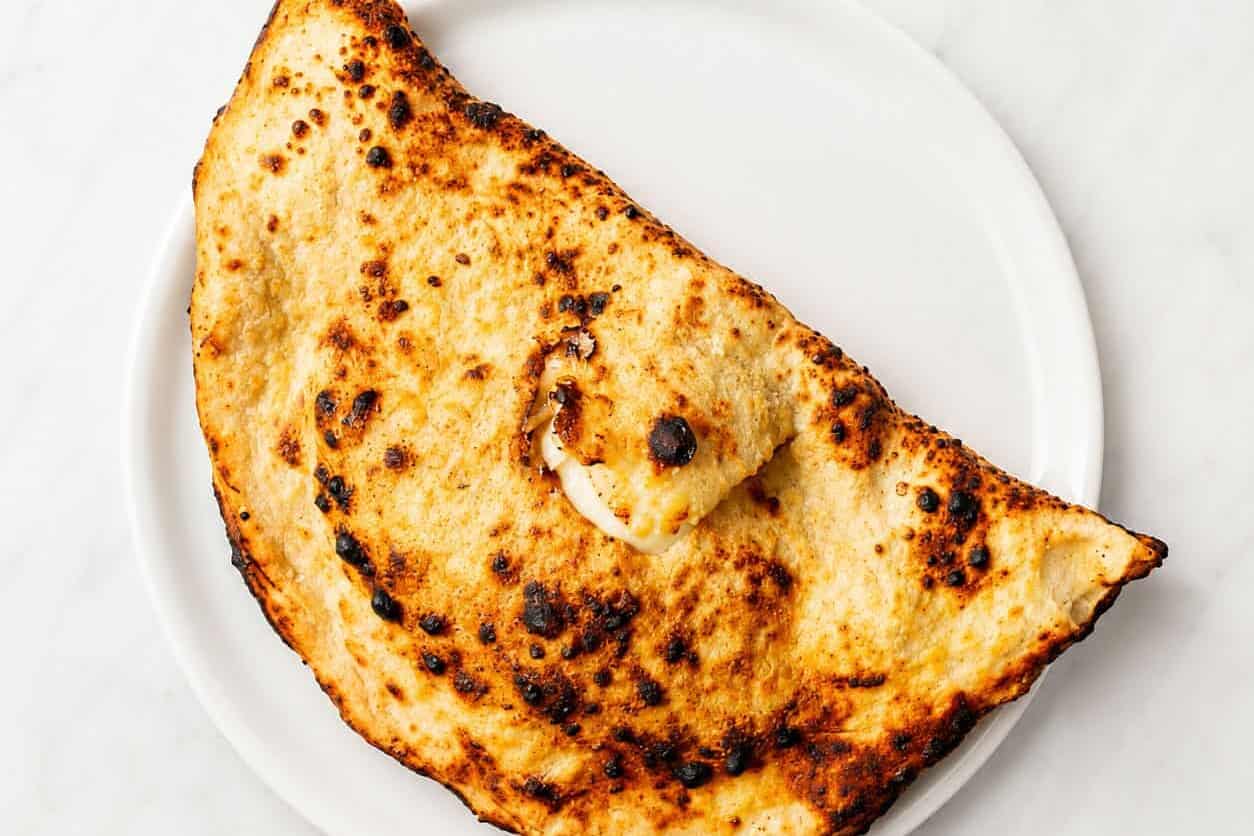
At Via Napoli Pizzeria, Sydney’s Neapolitan Pizzeria, the calzone has always been part of the menu for a straightforward reason: it belongs there. Via Napoli Pizzeria, a Neapolitan pizza restaurant with Sydney locations at Via Napoli Pizzeria Surry Hills and Via Napoli Pizzeria Lane Cove, has served it from day one. Born in Naples from the same dough tradition as the Margherita and every flat pizza that came before it, the calzone arrives sealed and golden, shaped like a half-moon, with everything hidden inside. It looks nothing like a pizza. It eats quite differently. And once you’ve had a properly made one, the logic of it becomes obvious.
What Is a Calzone?
A calzone is a folded Italian pizza made from Neapolitan pizza dough that is filled, sealed into a half-moon shape, and baked in a wood-fired oven until the exterior is golden and slightly blistered. Unlike a flat pizza, the toppings are enclosed within the dough, where they steam and concentrate during baking rather than caramelise under direct heat.
The craft that underpins the calzone — the slow-fermented dough, the wood-fired oven, the hands of a trained pizzaiuolo — is part of what UNESCO recognised in 2017 as an element of intangible cultural heritage: L’arte dei Pizzaiuoli Napoletani. The dish begins with the same slow-fermented Neapolitan dough used for flat pizza: 00 flour, water, salt, and yeast, shaped by hand and baked at high heat. The folding is the only departure. Everything else is the same craft.
What Does Calzone Mean?
Calzone means “trouser leg” in the Neapolitan dialect — a reference to the folded shape of the dough, which resembles a large stuffed crescent or pant leg. The name reflects the dish’s origins as portable, practical food: a complete pizza you could carry and eat without a plate or utensils.
In Italian, it is pronounced kahl-TSOH-neh, with the emphasis on the second syllable. The plural is calzoni. In Naples, the word has always carried that sense of a thing sealed and complete — everything in its place, the dough doing the work of containment.
A Dish with Deep Neapolitan Roots
Calzone has been part of Neapolitan culinary life since at least the 18th century, emerging alongside flat baked pizza from the same street food culture of Naples. The earliest documented versions appeared as a practical working meal: a complete pizza that could be eaten on the move, without utensils, by vendors and labourers moving through a city that was always busy.
That portability shaped its form. Where flat pizza was a table dish — something to share and tear apart — calzone was personal and sealed. The filling stayed put. The crust kept everything contained and warm. It was designed for the rhythm of Neapolitan street life, and it reflected the same discipline that governed flat pizza: the right ingredients, in the right proportions, cooked at the right heat.
The Associazione Verace Pizza Napoletana (AVPN), established in Naples in 1984 to codify and protect the craft of authentic Neapolitan pizza-making, recognises calzone within that tradition. The same standards that govern the dough — flour type, hydration, minimum fermentation time, oven temperature — apply here too. A properly made calzone is not a shortcut version of pizza. It is the same craft in a different form.
Calzone vs Pizza: What Actually Changes?
The most common question about calzone is whether it’s just pizza folded in half. Structurally, yes — but the experience is quite different, and the difference comes down to heat and form.
On a flat pizza, toppings are exposed to direct heat from the wood-fired oven at 430–480°C. They caramelise, blister, and take on char. The tomato reduces. The fior di latte forms individual pools. The cornicione — the raised outer crust — puffs and blisters around a charred base.
Inside a calzone, none of that happens. Ingredients are sealed away from the flame. They steam rather than roast, becoming denser and more concentrated. The tomato melds deeply with the cheese. The filling becomes uniform, creamy, and intensely flavoured. The cornicione disappears when you fold the dough; the sealed edge becomes a thick, chewy border instead — the structural wall that holds everything in.
The eating experience is also different. A flat pizza invites you to tear and share. A calzone arrives self-contained. You cut into it — steam escapes, the filling is revealed — and eat section by section. Every bite carries the same ratio of dough to filling, the same texture, the same temperature throughout.
Calzone vs Pizza Fritta: Two Ways to Fold It
Both calzone and pizza fritta are folded, filled, and made from the same Neapolitan dough. The cooking method is what separates them — and the difference is immediate.
Pizza fritta is deep-fried, producing a crisp, crackly exterior best eaten the moment it comes out of the oil. Calzone is baked in the wood-fired oven, producing a softer crust that holds its structure longer at the table. The richness levels differ too: pizza fritta carries the depth of frying oil; calzone is leaner, its flavour coming from the filling and the char of the oven.
Within Naples, the distinction has always reflected different contexts. Pizza fritta is street food — something to eat standing up, immediately. Calzone is a restaurant dish — something to sit with, cut slowly, and enjoy at the table.
Calzone vs Stromboli: Understanding the Difference
Calzone is sometimes confused with stromboli, but the two dishes have different origins and different structures. Calzone is Neapolitan — it originates in Naples, is sealed into a half-moon shape, and is baked. Stromboli is Italian-American, originating in the United States and named after the volcanic island off Sicily. It is rolled into a cylindrical shape — more like a scroll than a sealed pocket — with the filling layered through the roll rather than enclosed in a single cavity.
The filling approach also differs. Calzone typically includes ricotta as a creamy base, with mozzarella and cured meat. Stromboli usually relies on firmer cheeses layered through the roll rather than enclosed in a sealed cavity. The two dishes share the idea of dough enclosing filling, but they belong to different culinary lineages: one Neapolitan and centuries old, the other a 20th-century Italian-American invention.
What Goes Inside a Calzone?
The Neapolitan tradition keeps calzone fillings disciplined. A well-made calzone is not a kitchen sink — it is a few ingredients chosen for how they behave when sealed and baked together.
Classic combinations build from ricotta and mozzarella as the base — ricotta for creaminess and body, mozzarella for stretch. Cured meat — salami, ham, or both — adds depth and salt. Fresh basil and cracked black pepper lift the filling without competing with it. San Marzano tomato may be folded into the filling or served alongside as a sauce.
What unites the best versions is restraint. The filling should not fight itself. Each element should be identifiable and purposeful — because once the dough is sealed and baked, there is no hiding an overcrowded filling or a flavour that does not belong. The cooking method concentrates everything. A good filling rewards that concentration. A careless one makes it obvious.
The Calzone at Via Napoli
At Via Napoli Pizzeria — Surry Hills and Lane Cove, Sydney — the Calzone is filled with Solania San Marzano DOP, Fior di Latte, buffalo ricotta, basil, pepper, and EVOO, with a choice of double smoked shoulder ham or mild Neapolitan salami. It is cooked in the wood-fired oven and available on the dine-in menu at both locations.
The dough is the same slow-fermented base used across the full pizza menu — made with 00 flour and fermented for 8 hours before being shaped by hand. That process matters more inside a calzone than it might seem. A properly fermented dough creates a structure that lifts even when sealed: the interior wall stays light and yielding rather than pressing flat. You can taste the difference when you cut in.
Luigi Esposito, Via Napoli’s founder and a third-generation pizzaiolo who grew up in Naples, brought those dough standards from the source. Via Napoli was recognised in the Gambero Rosso Top Italian Restaurants 2026 guide — quiet confirmation that the kitchen applies the same discipline to every dish on the menu, calzone included.
What to Look For in a Great Calzone
Not all calzones are equal, and the difference between a well-made one and a mediocre one is visible before you take a bite.
The Exterior Colour
A calzone baked in a properly fired oven will show real colour — golden and blistered across the surface, but not pale or doughy. Blistering tells you the oven was at temperature and the bake was right.
The Edge Seal
The crimped border around the half-moon is structural, not decorative. A clean, firm seal means the dough was handled with care. A thin or poorly closed edge means the filling may have escaped during baking — or will when you cut in.
The Filling Consistency
When you cut a calzone open, the filling should be moist but cohesive. If liquid immediately floods the plate, the filling was too loose. If it’s dry and compact, the cheese-to-filling ratio was off. A well-balanced calzone sits between those two: steaming, yielding, and creamy without falling apart.
The Dough Character
This comes down to fermentation. A properly fermented dough yields without tearing, with a crust light enough to feel airy even around something filled and substantial. Dense, bready dough is the most common sign of a calzone that wasn’t made with enough care at the dough stage — long before it reached the oven. The standards of Neapolitan pizza apply to the calzone equally, and dough quality is where those standards are felt most immediately.
If you’ve worked through the flat pizza classics, the calzone is the natural next step — not a departure from Neapolitan tradition but a deepening of it. Same craft, different form, a completely different experience at the table.
Reserve a table at Via Napoli →
Frequently Asked Questions
What is a calzone?
A calzone is a folded Italian pizza made from Neapolitan pizza dough. The dough is filled, sealed into a half-moon shape, and baked in a wood-fired oven until golden. Unlike a flat pizza, the filling is enclosed within the dough, where it steams and concentrates during baking rather than being exposed to direct heat.
What does calzone mean?
Calzone means “trouser leg” in the Neapolitan dialect — a reference to the folded, crescent shape of the dough. The name reflects its origins as a portable, practical dish designed to be eaten on the move without a plate or utensils, serving workers and street vendors in 18th-century Naples.
Is a calzone just pizza folded in half?
In structural terms, yes — but the experience is quite different. Because the filling is sealed inside, ingredients steam rather than roast, producing a denser, creamier texture throughout. The crust also behaves differently when folded and sealed, creating a thick, chewy border in place of the open, airy cornicione found on flat Neapolitan pizza.
What is the difference between a calzone and pizza fritta?
Both calzone and pizza fritta are made from Neapolitan pizza dough and filled before cooking, but calzone is baked in a wood-fired oven while pizza fritta is deep-fried. Calzone produces a softer, more yielding crust that holds its structure at the table; pizza fritta produces a crisp, crackly exterior best eaten immediately. Pizza fritta is a street food tradition; calzone is a sit-down restaurant dish.
What is the difference between a calzone and a stromboli?
Calzone is a Neapolitan dish — sealed into a half-moon shape and baked, typically filled with ricotta, mozzarella, and cured meat. Stromboli is Italian-American in origin, rolled into a cylindrical shape with the filling layered through the roll rather than enclosed in a sealed pocket. The two dishes share the concept of dough enclosing filling but come from different culinary traditions and produce quite different results.
What goes inside a traditional calzone?
Traditional Neapolitan calzone is filled with ricotta and mozzarella as the base, along with cured meat such as salami or ham, fresh basil, and black pepper. San Marzano tomato may be folded into the filling or served alongside as a sauce. The Neapolitan approach emphasises a small number of quality ingredients that work together rather than a complex or crowded filling.
Is calzone baked or fried?
Calzone is baked — traditionally in a wood-fired oven at 430–480°C. This distinguishes it from pizza fritta, which is deep-fried. Baking gives calzone its characteristic golden, slightly blistered exterior while keeping the interior soft and steaming. The fried version of the folded Neapolitan dough is a distinct dish with its own street food history in Naples.
Where can I try authentic calzone in Sydney?
Via Napoli Pizzeria serves the Calzone at both its Surry Hills (628 Crown Street) and Lane Cove (141 Longueville Road) locations. It is made with Solania San Marzano DOP, Fior di Latte, buffalo ricotta, basil, pepper, and EVOO, with a choice of double smoked shoulder ham or mild Neapolitan salami, and cooked in the wood-fired oven. Available on the dine-in menu at both venues.

Via Napoli is Sydney’s home of authentic Neapolitan pizza, founded by Naples-born pizzaiolo Luigi Esposito. Luigi grew up in Naples helping his grandmother sell pizza fritta on the streets before training in professional kitchens and mastering the craft of traditional Neapolitan pizza-making. He brought those traditions to Sydney when he opened Via Napoli in Lane Cove in 2011 — introducing the city to properly wood-fired Neapolitan pizza: long-fermented dough, premium Italian ingredients, and high-temperature ovens that produce the soft, airy, charred crust that defines the real thing.
Now with two locations in Surry Hills and Lane Cove, Via Napoli is one of Sydney’s most-searched Italian restaurants and a Gambero Rosso Top Italian Restaurants 2026 recipient. This blog draws on over a decade of hands-on experience with Neapolitan pizza to cover the craft and culture behind what we do — from dough fermentation and regional pizza traditions to menu guides, dining occasions and the people who make it all happen.