
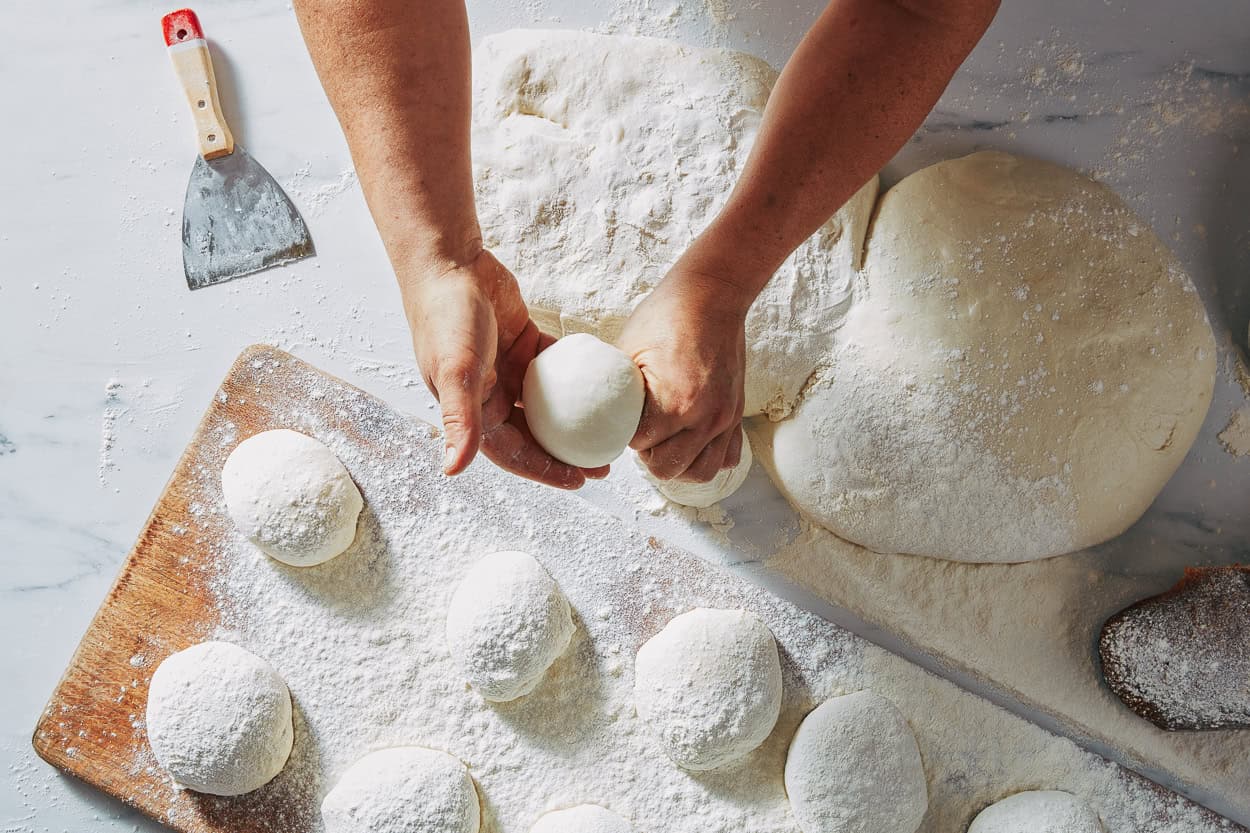
Authentic Neapolitan pizza dough contains four ingredients: 00 flour, water, salt and yeast. No oil, no sugar, no additives. What transforms those four elements into one of the world’s most celebrated food traditions is not a secret ingredient — it is discipline. At Via Napoli Pizzeria’s Neapolitan pizza restaurant in Sydney, that discipline shows up in the right flour, calibrated hydration, slow fermentation, and a wood-fired oven reaching 430–480°C — the details that separate a properly made Neapolitan base from everything else.
Via Napoli Pizzeria, a Neapolitan pizza restaurant with locations in Surry Hills and Lane Cove, Sydney, is built on that discipline at both restaurants. Founder Luigi Esposito — a third-generation pizzaiolo born and raised in Naples — brought the same standards his family followed in southern Italy to Via Napoli, an Italian restaurant in Surry Hills and our Lane Cove pizzeria, where the restaurant has been recognised in the Gambero Rosso Top Italian Restaurants 2026 guide. What follows is how that dough actually works: the ingredients, the fermentation, the shaping, and the bake that makes all the difference.
The Four Ingredients — and Why Nothing Else Belongs
The Associazione Verace Pizza Napoletana (AVPN), the organisation that has codified Neapolitan pizza standards since 1984, specifies the ratios precisely: per litre of water, 40–60 grams of salt and between 1,600 and 1,800 grams of flour, with the quantity of yeast adjusted for ambient temperature and humidity. These are not guidelines — they define what counts as authentic Neapolitan dough.
The absence of oil and sugar is as deliberate as what is included. Oil softens the gluten structure and changes how the dough behaves in extreme heat. Sugar accelerates fermentation and introduces browning that isn’t part of the Neapolitan tradition. Neither belongs in a dough where the process itself — not ingredients beyond the four — is what creates the flavour and texture that have made Neapolitan pizza a UNESCO-recognised culinary tradition.
Why 00 Flour
00 flour is milled to a very fine particle size and carries a protein level that produces strong but extensible gluten. That balance is what the technique depends on: the dough needs enough structure to hold its shape during shaping, but enough elasticity to be stretched thin at the centre without tearing. Coarser flour produces a stiffer, less responsive dough that resists the hand-stretching technique and doesn’t behave the same way when it meets very high heat.
The Role of Salt and Yeast
Salt strengthens the gluten network and moderates yeast activity during fermentation — without it, the dough ferments unevenly and loses structural integrity. Yeast is used sparingly in authentic Neapolitan dough, because time, not quantity, does the real work. A small amount of yeast over a long fermentation period develops more complex flavour and better texture than a large amount over a short one. The yeast initiates the process; the hours complete it.
Hydration: What the Water Percentage Changes
Neapolitan pizza dough typically sits at 60–65% hydration — roughly 60 to 65 grams of water per 100 grams of flour. That is higher than many other pizza styles, and it directly shapes both fermentation and baking.
Higher hydration keeps the interior crumb moist and open, encourages the formation of air pockets during fermentation, and allows rapid oven spring when the dough hits extreme heat. The result is a centre that stays soft and foldable rather than turning crisp or dry. Getting hydration right is one of the subtler disciplines in Neapolitan pizza-making — the absorption capacity of the flour, ambient temperature, and fermentation length all affect the correct level. Experienced pizzaioli calibrate it by feel as much as by formula.
Fermentation: Where Flavour Is Actually Made
Fermentation is the step that separates Neapolitan dough from fast-risen alternatives. The AVPN specifies a minimum of 8 hours, and that’s the standard Via Napoli holds to — a deliberate commitment that gives enzymes time to break down the starches and proteins in the flour into simpler, more digestible compounds.
That enzymatic activity does several things at once. It develops a nuanced, lightly tangy flavour that no quantity of yeast or added ingredients can produce in fast-risen dough. It builds the internal air structure that will expand dramatically in the oven. And it makes the gluten network more extensible, so the dough stretches cleanly under the pizzaiolo‘s hands rather than springing back.
There is also a digestibility dimension worth understanding. Slow fermentation reduces the residual gluten load and breaks down complex carbohydrates more thoroughly than short fermentation allows. This is part of why properly made Neapolitan pizza tends to sit lighter than its size suggests — the fermentation has done work that would otherwise fall to the digestive system, as covered in more detail in why Neapolitan pizza is easier to digest.
Hand-Shaping and the Cornicione
Once the dough has completed its fermentation and rested, it is divided and shaped into balls. The AVPN specifies between 200 and 280 grams per ball, producing a finished pizza 22 to 35 centimetres in diameter. Shaping is done by hand, never with a rolling pin.
A rolling pin compresses the dough and destroys the air pockets that fermentation spent hours building. Hand-stretching preserves them. The pizzaiolo works outwards from the centre, applying pressure with the fingertips and rotating the disc, until the centre is no more than 0.25 centimetres thick. The outer edge is left considerably thicker — this is the cornicione, the raised rim that traps gas during baking. The AVPN specifies the cornicione should reach between 1 and 2 centimetres in height, swollen and free from burns, its surface marked by irregular blistering where the dough caught the flame.
Each pizza looks slightly different because it was shaped by a person’s hands. That variation is not a quality problem — it is the evidence of the technique.
The Wood-Fired Bake: 430–480°C for 60-90 Seconds
Shaped and topped, the pizza goes into the wood-fired oven. According to AVPN international regulations, the cooking surface must reach between 430–480°C. At that temperature, the pizza bakes in 60-90 seconds — compared to ten minutes or more in a conventional oven at a fraction of the heat.
That speed defines the final texture. Intense heat causes rapid oven spring in the cornicione, producing the dramatic puff and leopard spotting — the irregular dark blistering that marks an authentic Neapolitan bake. The base sets quickly without losing moisture. The interior stays soft. The toppings — Solania San Marzano DOP tomatoes, Fior di Latte, fresh basil — cook in the same burst of heat without stewing or losing their freshness. For more on how wood-fired pizza works and why the method matters, see our full guide.
How to Recognise Properly Made Neapolitan Dough
A well-made Neapolitan base is light without being insubstantial, soft in the centre, airy at the rim, and flexible enough to fold lengthways without cracking. The cornicione carries visible char — not uniform browning, but irregular dark patches where the dough caught the flame or made contact with the oven floor. The smell, before you take a bite, should be faintly wheaten and lightly fermented.
What it should not be: crisp all the way through, bready or dense in the crust, or heavy in the stomach after eating. If a Neapolitan pizza leaves you feeling weighed down, the fermentation was almost certainly too short.
Via Napoli and the Neapolitan Standard
For Luigi Esposito, these are not techniques he learned from a book — they are how pizza was made in the Naples household he grew up in. His grandfather made dough this way. His father made dough this way. When he founded Via Napoli Pizzeria, he carried that standard to Surry Hills and later to Lane Cove, with the same discipline applied at every service.
The dough is the foundation. The San Marzano tomatoes, the Fior di Latte, the basil, the fire — they can only do what they’re supposed to do when the base underneath them is right.
Book a table and taste it for yourself →
Frequently Asked Questions
What are the four ingredients of authentic Neapolitan pizza dough?
Authentic Neapolitan pizza dough contains exactly four ingredients: 00 flour, water, salt and yeast. No oil, sugar or additives are used. The AVPN (Associazione Verace Pizza Napoletana), which has codified Neapolitan pizza standards since 1984, specifies precise ratios — per litre of water, 40–60 grams of salt and 1,600–1,800 grams of flour. The absence of oil and sugar is as deliberate as what is included.
Why is 00 flour used for Neapolitan pizza dough?
00 flour is milled to a very fine particle size and has a protein level that produces strong but extensible gluten. That balance allows Neapolitan pizza dough to be hand-stretched thin at the centre without tearing, while still holding its shape. Coarser flour produces a stiffer dough that resists the hand-stretching technique and behaves differently at the extreme temperatures of a wood-fired oven.
How long is Neapolitan pizza dough fermented?
The AVPN specifies a minimum of eight hours of fermentation for authentic Neapolitan pizza dough. At Via Napoli Pizzeria in Surry Hills and Lane Cove, Sydney, the dough ferments for 8 hours. Fermentation allows enzymes to break down starches and proteins more thoroughly, developing deeper flavour and making the finished pizza lighter and easier to digest.
What is the cornicione on a Neapolitan pizza?
The cornicione is the raised outer rim of a Neapolitan pizza — the thick, untopped edge that puffs dramatically during baking. The AVPN specifies the cornicione should reach 1 to 2 centimetres in height, free from burns, and marked by irregular blistering known as leopard spotting. It forms because the outer edge of the hand-stretched disc is left thicker than the centre, trapping gas that expands rapidly in the wood-fired oven.
Why is Neapolitan pizza dough never rolled with a pin?
Rolling pins compress the dough and destroy the air pockets that fermentation builds over many hours. Hand-stretching preserves those pockets, which expand during baking to create the characteristically soft, airy interior of a Neapolitan base. The AVPN international regulations specify hand-shaping as the only acceptable forming technique for authentic Neapolitan pizza.
What temperature does a wood-fired oven reach for Neapolitan pizza, and how long does it bake?
According to AVPN international regulations, a wood-fired oven must reach 430–480°C to bake authentic Neapolitan pizza. At that temperature, the pizza cooks in 60-90 seconds. The intense heat causes rapid oven spring in the cornicione, produces the characteristic leopard spotting, and creates a soft interior with a lightly charred exterior — a result that cannot be replicated in a conventional oven baking at lower temperatures for longer.

Via Napoli is Sydney’s home of authentic Neapolitan pizza, founded by Naples-born pizzaiolo Luigi Esposito. Luigi grew up in Naples helping his grandmother sell pizza fritta on the streets before training in professional kitchens and mastering the craft of traditional Neapolitan pizza-making. He brought those traditions to Sydney when he opened Via Napoli in Lane Cove in 2011 — introducing the city to properly wood-fired Neapolitan pizza: long-fermented dough, premium Italian ingredients, and high-temperature ovens that produce the soft, airy, charred crust that defines the real thing.
Now with two locations in Surry Hills and Lane Cove, Via Napoli is one of Sydney’s most-searched Italian restaurants and a Gambero Rosso Top Italian Restaurants 2026 recipient. This blog draws on over a decade of hands-on experience with Neapolitan pizza to cover the craft and culture behind what we do — from dough fermentation and regional pizza traditions to menu guides, dining occasions and the people who make it all happen.