
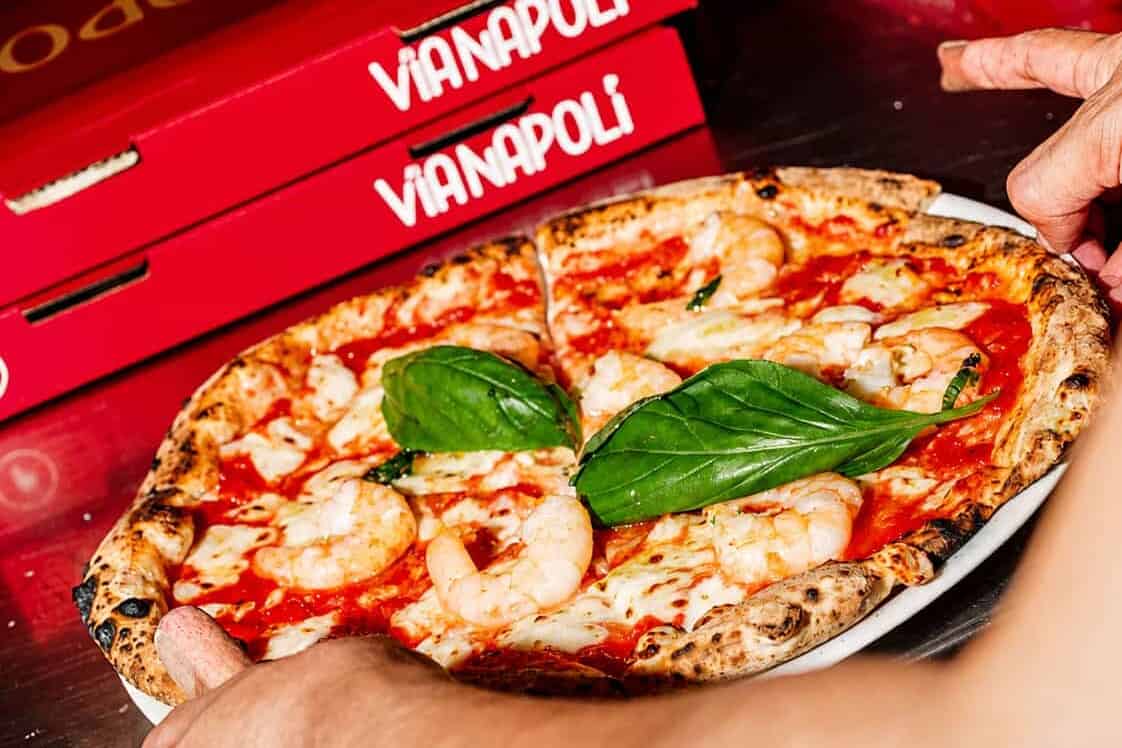
At Via Napoli Pizzeria’s Neapolitan Pizza in Sydney, the question of what makes Italian pizza different has a specific answer: it starts with the dough, it comes together in the oven, and it holds back on everything that doesn’t need to be there. That discipline — knowing what to include and what to leave out — runs through every serious Italian pizza tradition, from Naples to Rome to Sydney.
Via Napoli Pizzeria, a Neapolitan pizza restaurant with locations in Surry Hills and Lane Cove, Sydney, brings that same discipline to our Surry Hills pizzeria and the Italian restaurant on Longueville Road.
Via Napoli Pizzeria was founded by Luigi Esposito, a third-generation pizzaiolo from Naples, and recognised in the Gambero Rosso Top Italian Restaurants 2026 guide. What he brought to Sydney is not an interpretation of Italian pizza. It is the genuine article, made the way it has always been made in Naples.
Italian Pizza Is Built on Restraint, Not Excess
Italian pizza is defined not by what it adds, but by what it holds back. The foundation is a simple dough — flour, water, salt, and yeast — balanced toppings chosen for how they work together, and a short, fierce burst of heat that transforms everything in under two minutes.
Ask someone what makes Italian pizza different from other styles and the answer is rarely one single thing. It is not only the oven, the dough, the tomato, or the cheese. It is the relationship between all of them. A Margherita is not just tomato and mozzarella. It is the way bright tomato and creamy cheese meet a dough that is airy enough to carry them without becoming the main event.
This is where Italian pizza often feels different from more heavily topped styles. It is not designed to be overloaded. It is designed to be expressive. A few good ingredients, handled well, say more than a long list of extras.
The Dough Is the Foundation
Authentic Italian pizza dough is defined by simplicity — flour, water, salt, and yeast — and the time given to fermentation. That combination, done properly, produces a base with far more character than any shortcut can replicate.
At Via Napoli, the dough ferments for 8 hours. That extended cold fermentation gives the base complexity, lightness, and a gentle chew that is unmistakably different from a quickly made dough. The flour needs strength and character. The hydration — typically around 60–65% — needs to be balanced. The shaping needs care.
The result is a base that feels alive: soft through the centre, airy at the rim, and light enough to eat without feeling heavy. That raised, airy rim — called the cornicione in Italian — is one of the hallmarks of a well-made Neapolitan pizza. The dough is not just a platform for toppings. It is a flavour in its own right. For a closer look at the process, see our guide to Neapolitan pizza dough: ingredients, fermentation and technique.
High Heat Creates the Signature Texture
Neapolitan pizza cooks in a wood-fired oven at 430–480°C in 60-90 seconds. That combination of extreme heat and a very short cooking time is what produces the crust’s blistered surface, tender centre, and fragrant, smoky character.
The rim rises quickly. The base sets. The toppings warm and melt without losing their freshness. Those small charred marks on the crust — often called leoparding or leopard spotting — show where the dough has met fierce heat and changed in seconds. They are not a flaw. They are a sign of correctly made Neapolitan pizza, and the Associazione Verace Pizza Napoletana, which has codified Neapolitan pizza standards since 1984, describes them as a characteristic of an authentic result.
Italian pizza is not meant to look factory-perfect. It should look handmade. The shape may be slightly irregular, the crust may bubble differently from one pizza to the next, and the finish will show the character of the oven. That is part of its appeal. To understand what makes the wood-fired method so central, read our guide to what wood-fired pizza actually involves.
The Toppings Are Chosen for Balance
Italian pizza toppings are selected for how each ingredient works with the others, not for quantity. The goal is harmony between the dough, the sauce, the cheese, and whatever sits on top.
A classic Margherita is the clearest example: crushed Solania San Marzano DOP tomatoes, fior di latte (cow’s milk mozzarella), fresh basil, and olive oil. Each ingredient has a role. The San Marzano tomatoes bring brightness and natural sweetness without bitterness. The fior di latte melts cleanly rather than pooling. Basil adds fragrance. Olive oil adds richness. The dough carries everything without becoming secondary.
This approach extends across the pizza menu. A spicy salami pizza works because heat, fat, tomato and cheese are in balance. A white-base pizza works when richness is offset by freshness or texture. On the Via Napoli dine-in menu, this philosophy runs through classics such as Margherita, Napoletana, Diavola and Capricciosa, alongside white-base combinations and seasonal offerings. The range is generous, but the underlying idea is always Italian: ingredients should complement the dough, not bury it.
Italian Pizza Is Not One Single Style
Italian pizza is not a single style — it is a family of regional traditions united by a shared philosophy of quality ingredients, careful dough, and honest cooking.
Neapolitan pizza is soft, airy, wood-fired and often foldable. Roman styles may be thinner and crisper, depending on the region and format. Pizza al taglio is baked in trays and sold by the slice. Pizza fritta is fried, folded and deeply connected to Naples street-food culture.
In Surry Hills, Luigi Esposito explores two of those other traditions in their own right: Roman-style pizza al taglio through 170 Grammi, and Neapolitan fried pizza through Pizza Fritta 180, each one a dedicated expression of a single style, made the way it is meant to be made.
Neapolitan pizza has perhaps the most precisely documented tradition of any pizza style. The Associazione Verace Pizza Napoletana (AVPN), founded in Naples in 1984, codified the standards for authentic Neapolitan pizza — specifying flour type, dough thickness, approved ingredients, oven temperature, and even the shape and dimensions of the cornicione. In 2017, UNESCO inscribed the art of Neapolitan pizza-making — L’arte dei Pizzaiuoli Napoletani — on its Intangible Cultural Heritage of Humanity list.
What unites all Italian styles is not identical texture. It is philosophy. Italian pizza respects the dough, favours quality ingredients, honours regional identity, and follows the rhythm of traditional preparation. The best versions know what they are. To understand how Neapolitan pizza compares to other Italian traditions, see our guide to what makes Neapolitan pizza different.
Why Neapolitan Pizza Feels So Distinctive
Neapolitan pizza is distinctive because of the combination of a long-fermented dough, a short high-heat cook, and a restrained approach to toppings — producing a pizza that is soft, fragrant, and light rather than crisp, heavy, or densely topped.
The centre is soft rather than rigid. The cornicione is raised, airy and blistered. The toppings are applied with restraint. The pizza cooks for 60-90 seconds at 430–480°C, so the dough stays tender and the ingredients keep their freshness and character.
This can surprise diners who are used to crisp, heavily topped or long-baked styles. A Neapolitan pizza is not trying to be cracker-like. It is not designed to stand stiff from tip to crust. It is meant to be soft, expressive and fragrant, with a cornicione that carries the memory of the flame. That is why the first bite can feel genuinely different: less heaviness, more aroma, and more contrast between the toppings and the dough.
What to Look for in a Good Italian Pizza
A good Italian pizza reveals its quality at the crust before the first bite is taken. Look for lift, lightness, and colour in the cornicione. A pale, dense rim often means the dough has not been given enough fermentation time or heat. A well-made crust should have aroma before you even taste it — the result of slow fermentation and wood-fired heat working together.
Then look at the toppings. They should sit naturally on the pizza, not slide under the weight of too much cheese or sauce. The tomato should taste bright. The cheese should feel creamy. The olive oil should add richness without heaviness.
Finally, notice how you feel after eating. Italian pizza made with 8-hour fermented dough and cooked quickly at high heat tends to feel satisfying without becoming heavy. At Via Napoli, that is not accidental — it is the result Luigi Esposito, a third-generation Neapolitan pizzaiolo, has been working toward since before the first oven was lit in Sydney.
Experiencing Italian Pizza in Sydney
When people search for Italian pizza in Sydney, they are often looking for something more specific than a quick slice. They are looking for a pizza that feels connected to tradition — dough made with patience, toppings chosen with purpose, heat used with confidence, and a table that makes the meal feel shared.
Italian pizza is not only about what arrives on the plate. It is about the experience around it: the oven, the conversation, the first slice passed across to someone else. At Via Napoli Pizzeria in Surry Hills and Lane Cove, that experience is built around the traditions of Naples. Whether it is a classic Margherita, a bold Diavola, a folded calzone or a pizza made for the whole table, the difference is in the details — the dough, the flame, the ingredients, and the restraint that holds it all together.
Reserve a table at Via Napoli →
Frequently Asked Questions
What makes Italian pizza different from other pizza styles?
Italian pizza is defined by simple dough made from flour, water, salt, and yeast; toppings where each ingredient serves a specific purpose; and high-heat cooking that produces a blistered, tender crust. Rather than overloading the pizza, the focus is on harmony between the dough, tomato, cheese, olive oil, and toppings — a philosophy rooted in Italian culinary tradition and, in the case of Neapolitan pizza, codified by the Associazione Verace Pizza Napoletana (AVPN) since 1984.
Is Italian pizza the same as Neapolitan pizza?
Italian pizza is a broad category covering many regional styles, including Neapolitan, Roman, pizza al taglio, and pizza fritta. Neapolitan pizza is one of the most famous Italian styles — characterised by soft, airy dough, wood-fired cooking at 430–480°C, and simple, balanced toppings. Its tradition is so well-documented that UNESCO inscribed the art of Neapolitan pizza-making on its Intangible Cultural Heritage of Humanity list in 2017.
Why is Italian pizza often lighter than other pizza styles?
Italian pizza, particularly Neapolitan-style, tends to feel lighter because of the dough’s fermentation time and high-heat cooking method. At Via Napoli Pizzeria, the dough ferments for 8 hours, which develops a lighter crumb structure and improves digestibility. Cooking in a wood-fired oven at 430–480°C for 60-90 seconds sets the base quickly, producing a crust that is airy and tender rather than dense or heavy.
Should Italian pizza be crispy or soft?
The texture of Italian pizza depends on the regional style. Neapolitan pizza is characteristically soft, airy, and foldable — the cornicione (raised rim) is light and blistered from the wood-fired oven, while the centre is tender rather than crisp. Some Roman styles are thinner and crisper. Neapolitan pizza is intentionally soft, and a hard, crisp base from edge to centre would indicate a different cooking method or a style other than Neapolitan.
Why does Italian pizza have charred spots on the crust?
The small charred spots on a Neapolitan pizza crust — known as leoparding or leopard spotting — are produced when the dough comes into direct contact with the floor of a wood-fired oven at 430–480°C. They are a sign of correctly made Neapolitan pizza, not a flaw. They add flavour and aroma, and AVPN standards recognise leoparding as a characteristic of authentic Neapolitan pizza. A pizza without them has likely been cooked at a lower temperature or for a longer time.
How is Italian pizza different from American pizza?
Italian pizza, especially Neapolitan-style, uses a thin, hand-stretched dough fermented for 8 hours, a small number of high-quality toppings, and a wood-fired oven at 430–480°C that cooks the pizza in 60-90 seconds. American-style pizza typically uses a thicker, often oil-enriched dough, a larger quantity of toppings, and a conventional oven at a lower temperature. The Italian approach prioritises flavour balance and lightness; the American approach tends toward richness and quantity.
What toppings are common on Italian pizza?
Common Italian pizza toppings include crushed tomato (often San Marzano DOP), mozzarella (fior di latte or buffalo), fresh basil, olive oil, anchovies, olives, salami, mushrooms, prosciutto, and seasonal vegetables. The principle across Italian pizza traditions is balance over quantity — each topping is chosen for how it works with the dough and the other ingredients, not simply to fill the surface of the pizza.

Via Napoli is Sydney’s home of authentic Neapolitan pizza, founded by Naples-born pizzaiolo Luigi Esposito. Luigi grew up in Naples helping his grandmother sell pizza fritta on the streets before training in professional kitchens and mastering the craft of traditional Neapolitan pizza-making. He brought those traditions to Sydney when he opened Via Napoli in Lane Cove in 2011 — introducing the city to properly wood-fired Neapolitan pizza: long-fermented dough, premium Italian ingredients, and high-temperature ovens that produce the soft, airy, charred crust that defines the real thing.
Now with two locations in Surry Hills and Lane Cove, Via Napoli is one of Sydney’s most-searched Italian restaurants and a Gambero Rosso Top Italian Restaurants 2026 recipient. This blog draws on over a decade of hands-on experience with Neapolitan pizza to cover the craft and culture behind what we do — from dough fermentation and regional pizza traditions to menu guides, dining occasions and the people who make it all happen.