
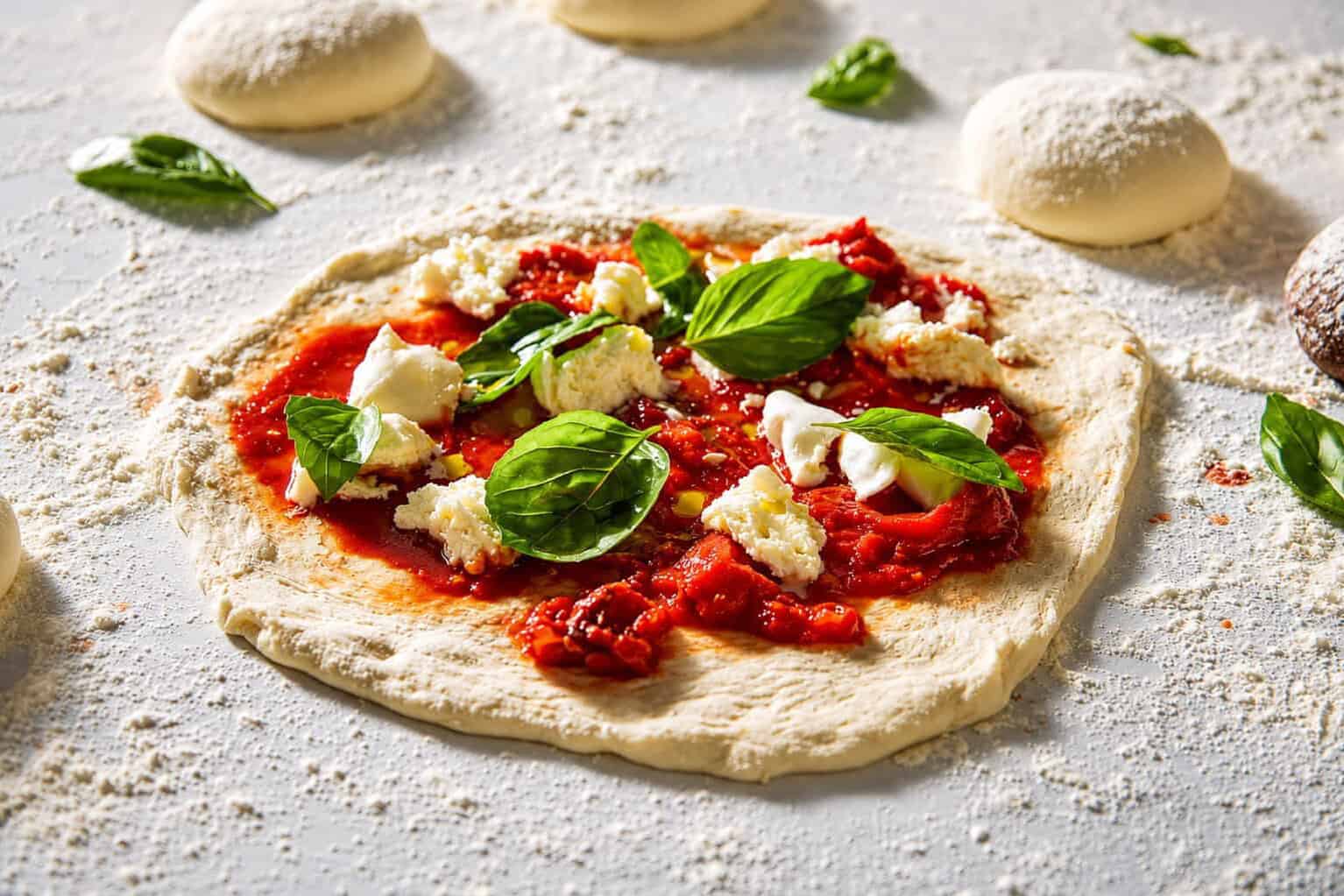
If you’ve ever sat with a pizza menu wondering what separates Neapolitan from Roman, you’re asking a question that matters. Both traditions are genuinely Italian. Both are worth understanding. But they come from different places — not just geographically, but in philosophy, technique, and what they ask of you when you eat them.
At Via Napoli, an Italian Restaurant in Sydney — with restaurants at our Surry Hills pizzeria and Via Napoli Pizzeria Lane Cove — we’ve spent more than a decade making pizza one way: the Naples way. That doesn’t mean we take Roman pizza lightly. It means we understand the difference clearly enough to explain it honestly.
Via Napoli Pizzeria, a Neapolitan pizza restaurant with locations in Surry Hills and Lane Cove, Sydney, is built around one of them. Here’s a fair comparison of two traditions worth knowing.
Where Neapolitan Pizza Comes From
Neapolitan pizza is the original modern pizza, born in 18th-century Naples on the streets of one of Europe’s most densely populated cities. It was fast, affordable, and intensely flavoured — a handful of ingredients cooked at extraordinary speed in a wood-fired oven. In 2017, UNESCO inscribed the art of the Neapolitan pizzaiuolo on its list of Intangible Cultural Heritage of Humanity, recognising the tradition not as a recipe but as a living craft passed through generations of families.
The governing body for Neapolitan pizza is the Associazione Verace Pizza Napoletana (AVPN), established in Naples in 1984. The AVPN’s specifications are precise: dough balls between 200 and 280 grams, a hydration level of 60–65%, a minimum of 8 hours’ fermentation, and baking at 430–480°C for 60-90 seconds. The finished pizza sits between 22 and 35 centimetres across, with a base no thicker than 0.25 centimetres at the centre and a raised, blistered rim — the cornicione — ranging from one to two centimetres.
Those constraints exist because Neapolitan pizza is built around transformation. The same dough, the same ingredients, the same oven — but when the technique is right, what comes out is unmistakably itself: soft, airy, foldable, and marked by the leopard spotting that only comes from genuine heat. At Via Napoli, our founder Luigi Esposito — a third-generation pizzaiolo born in Naples — ferments our dough for 8 hours, working with Solania San Marzano DOP tomatoes and fior di latte to honour the method he grew up with.
What Is Roman Pizza?
Roman pizza is a style from Rome defined by a thin base, a crisp bite, and a structured slice that holds its shape. Where Neapolitan pizza prioritises softness and speed, Roman pizza is built for texture and definition — a clean snap through the base, toppings that taste sharp and individual, a slice that neither folds nor sags.
There are two main Roman formats. Pizza Romana is the round, thin-crust style — often described as near-cracker-like in its crispness, restrained in its toppings, and technically precise in its fermentation. Pizza al taglio (“by the cut”) is the rectangular Roman tradition, baked in trays and sold by weight or by the slice — more common in bakeries and street food settings than at a restaurant table. Both sit under the same Roman umbrella: crispness, structure, and a base that earns its own attention rather than fading beneath the toppings.
The Real Difference Is in the Dough
The Neapolitan vs Roman debate comes down to dough — how it’s made, how it behaves in the oven, and what it asks of you when you eat it. The two traditions make fundamentally different choices here, and those choices produce fundamentally different results.
Neapolitan Dough
Neapolitan dough is built around high hydration — 60–65% — and a long, slow fermentation. At Via Napoli, that fermentation runs for 8 hours, developing depth of flavour and the open, airy structure that allows the dough to transform dramatically in the oven. When the pizza enters a wood-fired oven running at 430–480°C, the transformation happens in 60-90 seconds: the cornicione balloons and blisters, the base stays tender at the centre, and the characteristic leopard spotting appears on the underside. The result is a pizza designed to be eaten immediately — soft, foldable, and fragrant in a way that only fermentation and real heat can produce.
Roman Dough
Roman dough is typically stretched thinner and baked longer at a lower temperature. The extended bake gradually draws moisture from the dough, producing the even crispness across the base that defines the style. Where a Neapolitan pizza wants to be folded in half and eaten while it’s hot, a Roman slice is built to stand — structured, clean, and satisfying in a different way. It’s a pizza that suits a longer meal, where slices travel well from one end of the table to the other and hold their shape while you decide what comes next.
Why the Oven Defines Neapolitan Pizza
A wood-fired oven at the right temperature is not optional for authentic Neapolitan pizza — it is the method. At 430–480°C, a wood-fired oven does something no standard deck oven can fully replicate. The heat hits the base and the air above the pizza simultaneously. The cornicione rises fast, trapping steam inside and producing its characteristic lightness. The base chars and colours in the same 60-90 seconds the interior remains tender. And the wood smoke — subtle, present, not overwhelming — becomes part of the flavour in a way that only comes from burning real timber.
Roman pizza typically bakes at lower temperatures over a longer period, which suits its goal: an even, full-crust crispness from edge to edge. The oven plays a different role here — less about transformation in the moment, more about controlled, gradual drying. Both are legitimate baking traditions. But only one produces leopard spotting, a foldable centre, and a cornicione that puffs and blisters in under two minutes. For more on what makes wood-fired pizza different and why it matters, see our full guide.
Toppings: Restraint Versus Creativity
Both styles can be topped beautifully, but the philosophy behind what goes on top flows directly from the base — and the two traditions take opposite positions.
Neapolitan pizza keeps its toppings minimal. The base is soft enough that anything heavy or wet risks compromising the centre, and the flavour of well-fermented dough deserves to come through in every bite. The classic Margherita — Solania San Marzano DOP tomato, fior di latte, fresh basil, and extra virgin olive oil — is the clearest proof of this: four ingredients that taste completely like themselves, in balance, with nothing added and nothing taken away. The Marinara goes further still: San Marzano tomatoes, garlic, oregano, and olive oil. No cheese. The restraint is entirely the point.
Roman pizza, particularly pizza al taglio, welcomes more ambitious combinations. Because the base holds its structure, it can carry heavier ingredients without buckling, which opens the door to seasonal and creative choices that would overwhelm a softer Neapolitan base. At Via Napoli, the menu stays rooted in southern Italian flavour: ingredient quality first, balance always. Explore the dine-in menu to see the full range.
Which Style Is Right for You?
Neither style is better than the other. They represent two different answers to the question of what pizza should be, and the right choice depends entirely on what you want from the meal.
Neapolitan pizza is for the moment: eat it while it’s hot, fold it if you like, and let the 8-hour dough and wood-fired flavour do the work. It suits a warm, lively table where someone orders another pizza before the first one disappears. Roman pizza, with its structure and crispness, suits a longer, more varied dinner — where you might share two or three different toppings across an evening and the slices hold together while you make up your mind.
If you want to understand what makes Neapolitan pizza distinct in its own right — the technique, the ingredients, the tradition behind the style — this guide goes into the specifics.
Why Via Napoli Stays True to Naples
Via Napoli Pizzeria — Luigi Esposito’s Neapolitan pizza restaurant in Surry Hills and Lane Cove, Sydney — was built around a single conviction: that Neapolitan pizza, made the right way, doesn’t need improving. Luigi grew up in Naples, the third generation of a family with deep roots in the pizza-making tradition, and when he brought that tradition to Sydney he didn’t adapt it to local tastes. He preserved it.
That means 8-hour fermented dough. Solania San Marzano DOP tomatoes. Fior di latte. Wood-fired ovens running at 430–480°C. A menu that doesn’t try to be everything — just Neapolitan, done properly. In 2026, both Via Napoli locations were included in the Gambero Rosso Top Italian Restaurants guide, a recognition of the consistency of what we do across more than a decade of service.
We respect Roman pizza and what it represents in the broader story of Italian food. Luigi also brings that tradition to Surry Hills through 170 Grammi, his dedicated Roman pizza al taglio concept. But our own story has always been Naples. Meet the pizzaiolo behind Via Napoli to hear more of that story.
Try Authentic Neapolitan Pizza in Sydney
If reading this has you ready for a pizza that’s been 8 hours in the making, we’d be glad to make it for you.
Frequently Asked Questions
What is the main difference between Neapolitan and Roman pizza?
Neapolitan pizza is soft, airy, and cooked at 430–480°C in a wood-fired oven for 60-90 seconds, producing a tender, foldable centre and a blistered cornicione. Roman pizza is thinner and crispier, baked at a lower temperature over a longer period to draw moisture from the dough and produce a structured, crackly base. The core difference is dough composition, oven temperature, and bake time — and those differences produce two genuinely distinct eating experiences.
Is Neapolitan pizza meant to be soft in the middle?
Yes — the soft, foldable centre is an intentional characteristic of authentic Neapolitan pizza, not a flaw. The Associazione Verace Pizza Napoletana (AVPN) specifies a maximum base thickness of 0.25 centimetres at the centre, with a bake time of 60-90 seconds at 430–480°C. The high-hydration dough and extremely fast bake leave the centre supple and tender while the cornicione becomes airy and blistered. Authentic Neapolitan pizza is designed to be eaten immediately, straight from the oven.
What are the two main Roman pizza styles?
The two main Roman pizza styles are Pizza Romana — round, thin, and crispy throughout, with a near-cracker-like base — and Pizza al taglio, which is rectangular, baked in trays, and sold by weight or by the slice. Pizza al taglio is a street food and bakery tradition; Pizza Romana is the sit-down restaurant format. Both are defined by crispness and structure, in contrast to the soft, airy character of Neapolitan pizza.
Does Neapolitan pizza require a wood-fired oven?
Yes. The AVPN specification requires Neapolitan pizza to be baked in a wood-fired oven at 430–480°C for 60-90 seconds. This temperature and speed are what produce the characteristic soft centre, blistered cornicione, and leopard spotting on the base. A standard deck oven or home oven cannot reach these temperatures, which is why the result in a genuine wood-fired setting is different — not just in appearance but in flavour, texture, and structure.
Where can I try authentic Neapolitan pizza in Sydney?
Via Napoli Pizzeria serves traditional Neapolitan pizza at two Sydney locations — at 628 Crown Street, Surry Hills NSW 2010 and 141 Longueville Road, Lane Cove NSW 2066. Both restaurants use wood-fired ovens, 8-hour fermented dough, and Solania San Marzano DOP tomatoes, following the Neapolitan tradition brought to Sydney by founder Luigi Esposito, a third-generation pizzaiolo born in Naples. Via Napoli was included in the Gambero Rosso Top Italian Restaurants 2026 guide.

Via Napoli is Sydney’s home of authentic Neapolitan pizza, founded by Naples-born pizzaiolo Luigi Esposito. Luigi grew up in Naples helping his grandmother sell pizza fritta on the streets before training in professional kitchens and mastering the craft of traditional Neapolitan pizza-making. He brought those traditions to Sydney when he opened Via Napoli in Lane Cove in 2011 — introducing the city to properly wood-fired Neapolitan pizza: long-fermented dough, premium Italian ingredients, and high-temperature ovens that produce the soft, airy, charred crust that defines the real thing.
Now with two locations in Surry Hills and Lane Cove, Via Napoli is one of Sydney’s most-searched Italian restaurants and a Gambero Rosso Top Italian Restaurants 2026 recipient. This blog draws on over a decade of hands-on experience with Neapolitan pizza to cover the craft and culture behind what we do — from dough fermentation and regional pizza traditions to menu guides, dining occasions and the people who make it all happen.