
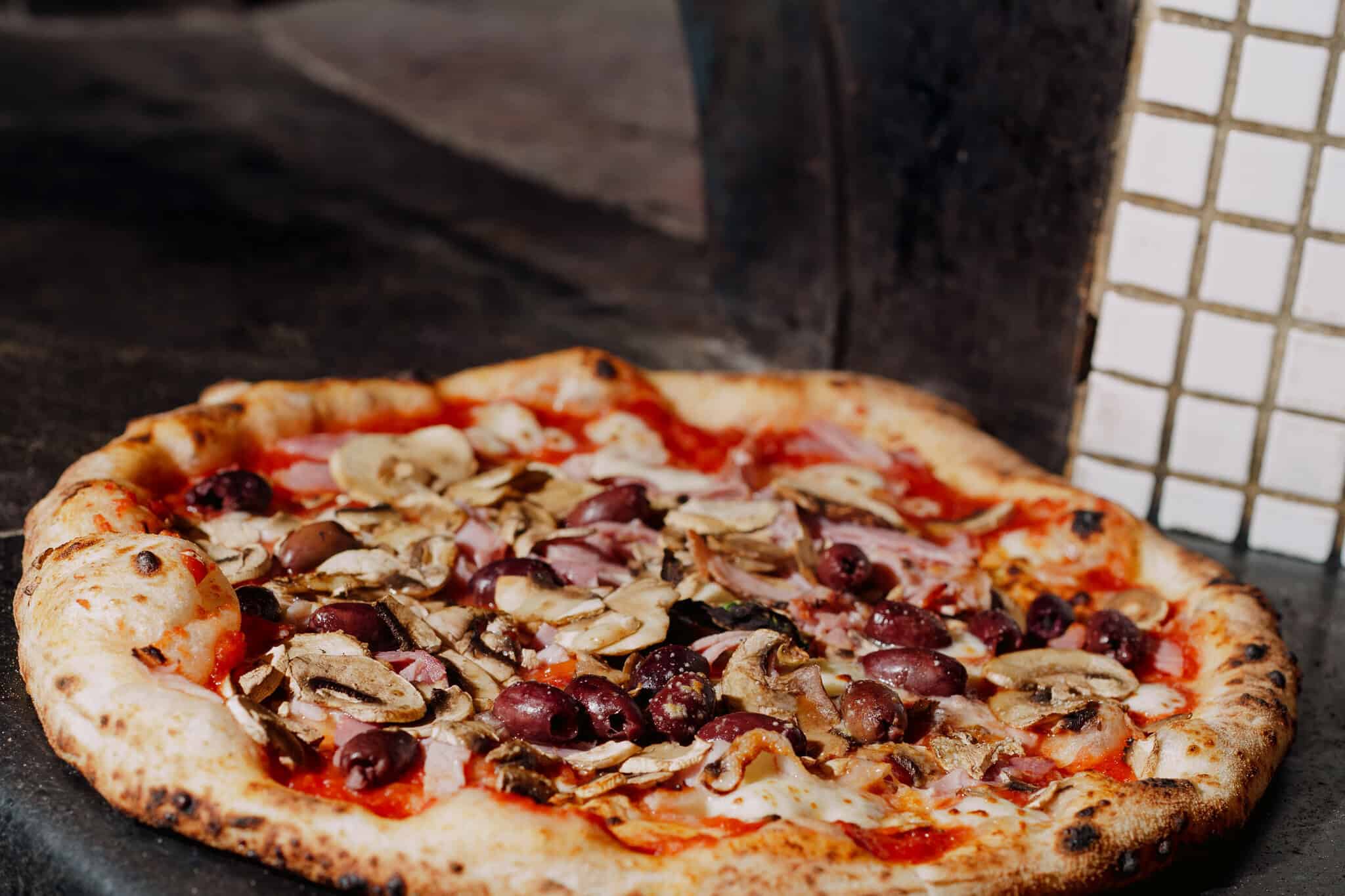
Wood-fired pizza tastes the way it does because of physics, not mystique — and at Via Napoli Pizzeria, Sydney’s Neapolitan Pizzeria, the wood-fired ovens at both Via Napoli Pizzeria Surry Hills and Via Napoli, an Italian restaurant in Lane Cove reach temperatures of 430–480°C. A pizza bakes in 60-90 seconds. That intensity — and the specific way it acts on dough, tomato, and cheese — produces a result that a conventional oven simply cannot replicate.
Via Napoli Pizzeria, a Neapolitan pizza restaurant with locations in Surry Hills and Lane Cove, Sydney, holds every pizza to that same standard.
Here’s exactly what happens, and why it matters to how the pizza tastes.
What Makes Wood-Fired Pizza Taste Different?
Wood-fired pizza tastes different from conventionally baked pizza because extreme heat creates Maillard reactions in the dough that slower ovens cannot produce. At 430–480°C, the crust surface caramelises in seconds — developing flavour compounds that take far longer, or simply don’t form at all, at the lower temperatures of a home or commercial kitchen oven. The interior of the dough stays soft and tender because the outside sets before moisture has a chance to escape. The result is a crust with a crisp outer edge, a light, open interior, and a depth of flavour that comes directly from the speed and intensity of the cook.
Conventional ovens typically operate at 220–250°C and take 8–12 minutes to bake a pizza. That longer exposure to lower heat dries out the dough, overcooks the toppings, and flattens the contrast between crust and base that defines a Neapolitan pizza.
How Temperature Changes the Crust
At 430–480°C, the outer surface of pizza dough undergoes rapid caramelisation and charring that produces a complex, slightly smoky bitterness — the deliberate counterpoint to the sweetness of San Marzano tomatoes and the creaminess of fior di latte mozzarella. This happens in seconds, not minutes, which is why the interior of the dough stays moist and airy while the exterior takes on colour and structure.
This reaction is what produces leopard spotting — the distinctive dark, irregular blisters across the crust edge known as the cornicione. Far from being a sign of poor technique, leoparding is the visual proof of a correctly calibrated oven and well-fermented dough. A pale, even crust without those spots is often a sign the oven wasn’t hot enough, or the dough wasn’t properly prepared.
For a closer look at how the oven itself works, this guide to wood-fired pizza covers the mechanics in detail.
Why Toppings Stay Fresh Instead of Overcooking
A 60-90 second cook time means that fresh toppings stay exactly as they should be: bright, yielding, and full of their own flavour rather than stewed or reduced. San Marzano DOP tomatoes — the Solania-grown variety used at Via Napoli — have a natural sweetness and acidity that survives a 60-90 second cook beautifully. The same tomato left in an oven at 230°C for ten minutes concentrates, darkens, and loses the balance between acid and sugar that makes it exceptional.
Fior di latte mozzarella melts evenly under high heat rather than splitting or weeping into a greasy puddle, which is what happens when it’s held at lower temperatures for longer. Basil placed on the pizza after it leaves the oven wilts gently from residual heat rather than turning black in the process. Every ingredient behaves as it’s meant to behave — because the cooking time is short enough to let it.
What the Dough Contributes to the Flavour
The dough is a significant part of why wood-fired pizza tastes the way it does. At Via Napoli, the dough ferments for 8 hours using a slow cold process that develops lactic and acetic acids. These acids give the crust a mild, complex tang — not sour, but layered — and they also change the structure of the gluten in a way that makes the dough more extensible, lighter, and less likely to feel heavy after eating.
That fermentation works with the extreme oven heat rather than against it. The gas bubbles produced during fermentation expand rapidly at 430–480°C, creating the open, airy crumb and the characteristic lift in the cornicione. A fast-fermented or yeasted dough baked at high heat tends to blister unevenly and taste flat. The 8-hour process is what makes the crust earn its texture rather than just arriving at it by chance.
More detail is covered in the guide to Neapolitan pizza dough, including how hydration levels and fermentation time affect the final result.
Wood-Fired vs Conventional Oven: What the Difference Looks Like
The differences between the two cooking methods are measurable, not just a matter of opinion.
| Wood-Fired Pizza | Conventional Oven Pizza |
|---|---|
| Oven temperature: 430–480°C | Oven temperature: 220–250°C |
| Cook time: 60-90 seconds | Cook time: 8–12 minutes |
| Crust: crisp exterior, open airy interior, cornicione with leopard spotting | Crust: often dense, uniform, minimal char |
| Toppings: fresh, barely cooked, texturally distinct | Toppings: cooked through, sometimes reduced or greasy |
| Flavour: complex, layered, with Maillard char notes and caramelisation | Flavour: flatter, without high-heat caramelisation contrast |
| Structure: light, holds up well when boxed for takeaway | Structure: can turn dense or chewy as it cools |
Does Wood-Fired Pizza Still Taste Better As Takeaway?
Wood-fired pizza holds up better as takeaway than conventionally baked pizza because of the way the crust sets during cooking. The rapid heat exposure creates a firmer outer structure that traps less steam, which means the crust is less likely to go soft in a box. The high-hydration dough used in Neapolitan pizza is lighter than thicker delivery-style bases, and the open crumb structure releases heat gradually rather than trapping moisture against the base.
The result is a pizza that still tastes close to fresh after a ten-minute drive home — and one that reheats well in a skillet or oven without losing its texture entirely. The same qualities that make it taste better when fresh make it a better takeaway option than the alternatives.
Why It Feels Lighter After You’ve Eaten It
One of the most consistent things people notice about wood-fired Neapolitan pizza is that it doesn’t sit heavily. A Neapolitan pizza weighs around 250–280 grams — significantly lighter than a thick-base or deep-dish equivalent — and the 8-hour fermentation breaks down complex starches into simpler forms that are easier to process. That means the pizza tastes complete without tipping into overwhelming.
More detail on this is in the piece on why Neapolitan pizza is easier to digest — the short version is that fermentation time and cooking method both contribute to why a wood-fired pizza tends to leave you satisfied rather than uncomfortable.
Via Napoli Pizzeria — recognised in the Gambero Rosso Top Italian Restaurants 2026 guide, with locations in Surry Hills and Lane Cove, Sydney — has been making Neapolitan pizza this way since Luigi Esposito, a third-generation pizzaiolo from Naples, opened the first restaurant. The method hasn’t changed: wood-fired ovens, 8-hour fermented dough, Solania San Marzano DOP tomatoes.
Frequently Asked Questions
Why does wood-fired pizza taste better than regular pizza?
Wood-fired pizza tastes better because extreme heat — typically 430–480°C — produces rapid Maillard reactions in the dough that create complex, caramelised flavour compounds a conventional oven cannot replicate. The crust develops a crisp, lightly charred exterior while staying soft inside, toppings remain fresh rather than overcooked, and the 60-90 second cook time preserves the natural flavour of ingredients like San Marzano tomatoes and fior di latte mozzarella.
What temperature does a wood-fired pizza oven reach?
An authentic wood-fired pizza oven reaches between 430–480°C during service. At this temperature, a Neapolitan pizza bakes in 60-90 seconds. This is significantly hotter than a conventional home or commercial oven, which typically operates at 220–250°C. The extreme heat is what creates the characteristic leopard spotting on the cornicione and the light, airy texture inside the dough.
What is leopard spotting on pizza?
Leopard spotting — also called leoparding — refers to the dark, irregular char spots that appear across the crust edge (the cornicione) of a properly cooked Neapolitan pizza. These spots develop when well-fermented dough is exposed to oven temperatures of 430–480°C. They indicate correct heat, good dough hydration, and adequate fermentation time. A pale, uniform crust without leoparding is often a sign the oven wasn’t hot enough or the dough wasn’t properly prepared.
Is wood-fired pizza healthier than regular pizza?
Wood-fired Neapolitan pizza is generally lighter than thick-based or mass-produced alternatives. A standard Neapolitan pizza weighs around 250–280 grams, uses minimal ingredients, and is made with dough that has fermented for 8 hours. The fermentation breaks down complex starches into simpler forms that many people find easier to digest. Via Napoli’s dough contains no additives or preservatives — just flour, water, salt, and a small amount of yeast.
Are wood-fired pizzas carcinogenic?
Some charring is inevitable at wood-fired oven temperatures, and it’s part of the flavour profile of Neapolitan pizza. The char on a properly made Neapolitan pizza is localised — confined to the cornicione and scattered base spots — not uniform blackening across the pizza. If heavily charred areas appear, scraping them off before eating is a sensible approach. The overall level of char in a correctly made Neapolitan pizza is modest and is a by-product of the cooking method rather than its goal.
How long does it take to cook a pizza in a wood-fired oven?
In a wood-fired oven burning at 430–480°C, a Neapolitan pizza cooks in 60-90 seconds. The pizza is rotated once or twice during that time to ensure even cooking on all sides. This short cook time is central to what makes wood-fired pizza different — the extreme heat creates the crust texture and flavour compounds that lower-temperature, longer-cooking ovens cannot produce, while leaving toppings fresh rather than overcooked.

Via Napoli is Sydney’s home of authentic Neapolitan pizza, founded by Naples-born pizzaiolo Luigi Esposito. Luigi grew up in Naples helping his grandmother sell pizza fritta on the streets before training in professional kitchens and mastering the craft of traditional Neapolitan pizza-making. He brought those traditions to Sydney when he opened Via Napoli in Lane Cove in 2011 — introducing the city to properly wood-fired Neapolitan pizza: long-fermented dough, premium Italian ingredients, and high-temperature ovens that produce the soft, airy, charred crust that defines the real thing.
Now with two locations in Surry Hills and Lane Cove, Via Napoli is one of Sydney’s most-searched Italian restaurants and a Gambero Rosso Top Italian Restaurants 2026 recipient. This blog draws on over a decade of hands-on experience with Neapolitan pizza to cover the craft and culture behind what we do — from dough fermentation and regional pizza traditions to menu guides, dining occasions and the people who make it all happen.