
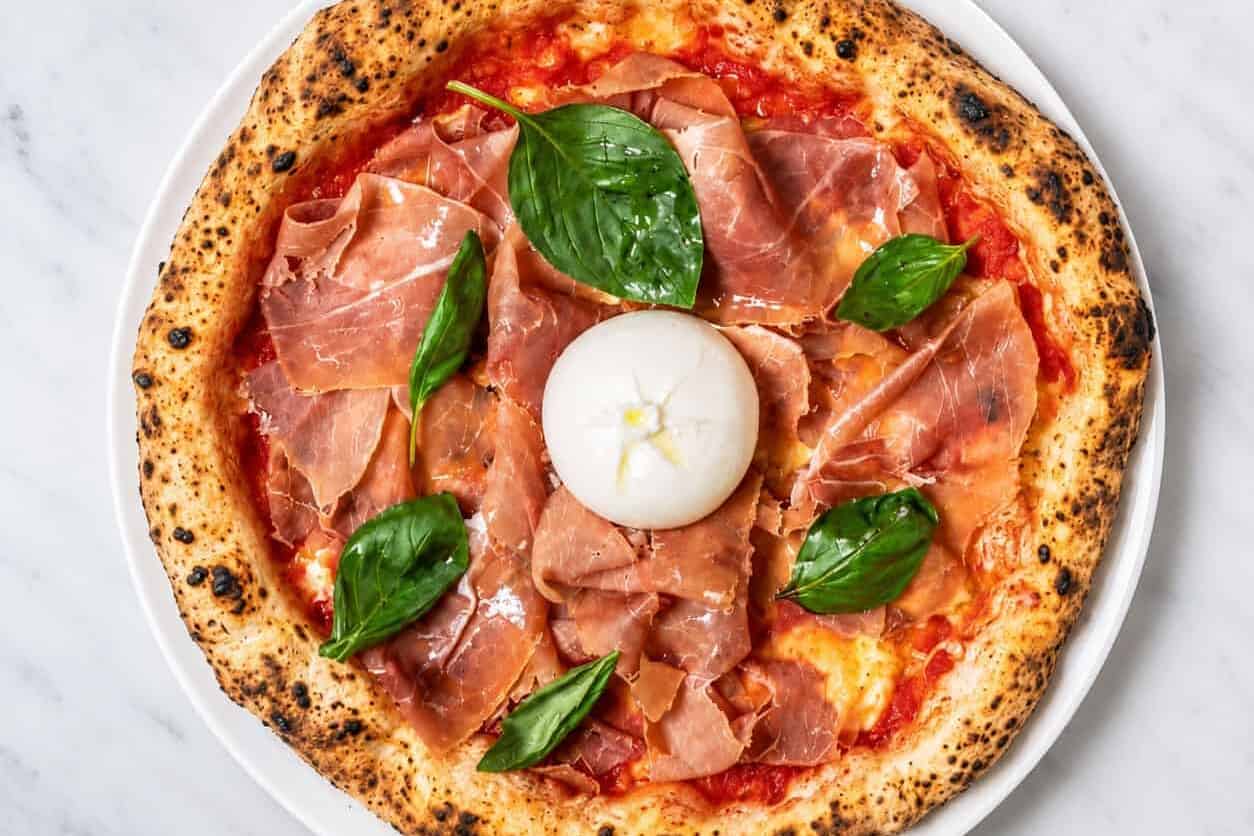
At Via Napoli Pizzeria, Sydney’s Neapolitan Pizzeria, burrata appears across five separate dishes — from a whole ball alongside Prosciutto di Parma and rosemary focaccia, to the cooling crown on a wood-fired pizza still hot from the oven. For a cheese that barely existed outside Puglia before the 1980s, that’s a remarkable amount of presence on any menu. Understanding what burrata actually is — how it’s made, what separates it from mozzarella, and why freshness matters more than almost any other Italian cheese — is understanding why it earns that kind of attention.
Via Napoli Pizzeria, a Neapolitan pizza restaurant with locations in Surry Hills and Lane Cove, Sydney, was founded by Naples-born third-generation pizzaiolo Luigi Esposito and is recognised in the Gambero Rosso Top Italian Restaurants 2026 guide. That’s the Italian restaurant on Crown Street and Via Napoli Pizzeria Lane Cove. Burrata appears across the antipasti, salad, and pizza sections of the dine-in menu — at different temperatures and in different combinations — making it one of the few ingredients you can experience multiple ways in a single visit.
What Is Burrata?
Burrata is a fresh Italian cheese made from cow’s milk, with an outer shell of pulled mozzarella and a filling of stracciatella — a loose, creamy mixture of torn mozzarella strands and fresh cream. When the pouch is cut or broken open, the interior spills out entirely: white, rich, and almost liquid at room temperature. From the outside, burrata looks like a compact ball of mozzarella. On the inside, it’s something else entirely.
The name comes from burro, the Italian word for butter — a reference to the richness of that cream-filled centre rather than any actual use of butter in production. The cheese is made fresh and meant to be eaten quickly. Everything about it — the delicate outer shell, the yielding interior, the brief shelf life — points toward a cheese built for immediacy rather than storage.
What Is Stracciatella? The Cream Filling Inside Burrata
The defining characteristic of burrata is its filling, called stracciatella — from stracciare, the Italian verb meaning to tear or shred. It is made by pulling fresh mozzarella into irregular pieces and blending them with cream until the mixture is loose and fluid. That blend is then sealed inside an outer mozzarella shell, which gives the cheese its shape while the filling remains entirely unset inside it.
Stracciatella is also sold as a standalone cheese in Italy, particularly in Puglia, where it is scooped into small containers and served as its own course. The flavour is similar to burrata — the same ingredients, the same freshness — but the presentation is different. Without a shell, stracciatella has no structure; it is simply the filling, loose and creamy, eaten with bread or spooned over pasta. Inside burrata, the mozzarella casing holds it long enough to arrive at the table intact. Once the shell is broken, both cheeses become the same thing.
Burrata vs Mozzarella: What’s the Difference?
Burrata and mozzarella are not interchangeable — burrata is made using mozzarella, but the two have entirely different textures, shelf lives, and uses in the kitchen.
Standard mozzarella — or Fior di Latte, the cow’s milk version used on Neapolitan pizza — is firm, elastic, and mild. It melts evenly and holds its structure under heat, which makes it essential on pizza. Burrata has a soft mozzarella exterior, but its cream-filled centre does not tolerate direct heat. The filling separates under high temperature, losing both texture and character. This is why, on the Burratina pizza at Via Napoli, burrata is added after the pizza comes out of the oven — preserving the contrast between the hot, charred crust and the cool, yielding cream at its centre.
The other key difference is shelf life. Mozzarella remains workable for several days post-production. Burrata should ideally be eaten within 24 to 48 hours of being made. The cream inside sours quickly, and the outer shell loses elasticity as the cheese ages — a distinction that changes how each ingredient can be sourced, stored, and used.
Where Does Burrata Come From?
Burrata originated in the area around Andria, in Puglia — the heel of the Italian boot — in the early twentieth century. It was created as a practical solution: a way to use leftover mozzarella scraps and the cream that rises to the surface of freshly drawn milk, rather than discard them. What began as a byproduct of the cheesemaking process became, over time, more refined and more sought-after than the cheese it was made from.
Puglia’s dairy tradition is centred on cow’s milk, which sets burrata apart from buffalo mozzarella — the fresh cheese associated with Campania, the neighbouring region to the north. Buffalo milk is richer and more distinctive; cow’s milk produces something lighter and cleaner. Burrata, with its delicate shell and sweet cream filling, reflects that lightness. Today it is produced across Italy and internationally, but the finest versions still trace their roots to the Murge plateau and the towns around Andria.
How to Serve Burrata
Burrata should be served at room temperature, not cold. Refrigeration firms the cream and dulls its flavour significantly — the cheese needs 20 to 30 minutes out of the fridge to return to the texture it was made for. The filling should be loose and almost pourable when you cut into it. If it holds firm, it’s still too cold.
Serve burrata whole on the plate and break it open at the table rather than slicing it in the kitchen. The moment the shell is cut, the filling begins to spread; breaking it in front of the person eating is part of what makes the dish. A drizzle of good extra-virgin olive oil and a little black pepper is all it needs on its own. Tomato and burrata is the Pugliese pairing that has spread globally: the acidity of the tomato cuts the fat of the cream, and fresh basil ties both together without competing.
Burrata should not be cooked directly. Apply heat and the filling separates — the cream and the mozzarella strands break apart, and the textural contrast that defines the cheese is lost. The exception is placing it on something already warm, as with the Burratina pizza: heat conducts upward from the base without cooking the cheese, leaving the cream intact on top.
How Via Napoli Uses Burrata Across the Menu
At the Via Napoli dine-in menu, burrata appears in five different dishes — a broader commitment to the ingredient than most Italian restaurants make. Each preparation uses it differently, so it reads as a distinct experience each time rather than a repeated note.
Burratina Pizza
The Burratina is the centrepiece: Solania San Marzano, Fior di Latte, Prosciutto di Parma, pepper, basil, and EVOO as the base — with burrata added after baking, so the cream filling stays intact until the pizza is cut. When it arrives at the table, the mozzarella has melted and caramelised at the edges; the burrata sits cool and whole at the centre, splitting open to coat the surrounding pizza with cream. Hot crust, cold filling, the salt of the prosciutto: each element is doing something the others cannot.
Parma Prosciutto
The Parma Prosciutto antipasto is Via Napoli’s most direct version of burrata: a whole ball served alongside thinly sliced Prosciutto di Parma and artisan garlic and rosemary focaccia. Three things placed together rather than composed. The prosciutto cuts the richness of the cream with salt and sweetness; the focaccia carries both. This is the dish to order if you want to understand what burrata actually tastes like before it’s been combined with anything more complex.
Puverella Salad
The Puverella Salad — vine-ripened tomatoes, cucumber, green olives, Spanish onions, croutons, burrata, EVOO, oregano, and basil — puts the cheese in its most traditional southern Italian context. Tomato and burrata is one of the oldest combinations in Pugliese summer cooking, long before the pairing became fashionable internationally. The acidity of the tomatoes cuts the fat of the cream; the oil and basil smooth and scent without competing. If you’ve been working through the antipasti section and overlooked the Puverella, it’s worth correcting.
Nerano and Elena 3.0 Pizzas
Two further pizzas feature burrata in different registers. The Nerano pairs it with zucchini purée and Fior di Latte — the purée itself standing in as the base rather than tomato — a reference to Pasta alla Nerano, the dish from the coastal village near Sorrento where zucchini and cheese became one of southern Italy’s defining combinations. The Elena 3.0 takes the cheese in a richer direction: white base, Prosciutto di Parma, Honey Truffle, basil, and EVOO, using the creaminess of the burrata as the counterweight to truffle’s earthiness.
Why Burrata Doesn’t Last
Burrata deteriorates faster than almost any other Italian cheese because the cream filling continues to sour after production. The difference between 24-hour-old and 72-hour-old burrata is meaningful — the filling thickens and becomes heavier, the outer shell softens and loses its elasticity, and the flavour shifts from clean and sweet toward sharp and acidic. It is not a cheese that improves with age.
This is why burrata at a restaurant is almost always better than burrata from a supermarket shelf. Restaurant kitchens receive smaller, more frequent deliveries and turn the cheese within its peak window. There is no sitting on a shelf for three days.
Traditionally, burrata was wrapped in asphodel leaves — a plant native to Puglia — which yellowed and wilted as the cheese passed its peak, giving a visible indicator of freshness without opening the package. Modern burrata is sold in brine, but the 48-hour principle has not changed.
Frequently Asked Questions
What is burrata?
Burrata is a fresh Italian cheese made from cow’s milk, with an outer shell of pulled mozzarella and a filling called stracciatella — a loose mixture of torn mozzarella strands and fresh cream. When cut open, the filling spills out as a rich, creamy liquid. Burrata is made fresh and has a very short shelf life, ideally eaten within 24 to 48 hours of production.
What is the difference between burrata and mozzarella?
Mozzarella is a firm, elastic cheese that melts evenly under heat and can be used for several days after production. Burrata is made using mozzarella as its outer shell, but its cream-filled interior makes it richer, more perishable, and unsuitable for direct cooking. Burrata is added to dishes after heat rather than during it, to preserve the texture of its cream centre.
What is stracciatella cheese, and how does it relate to burrata?
Stracciatella is the cream-filled interior of burrata cheese — a loose mixture of torn mozzarella pieces and fresh cream. The name comes from the Italian verb stracciare, meaning to tear or shred. Stracciatella is also sold as a standalone cheese in Italy, particularly in Puglia, where it is scooped and served directly. Inside burrata, stracciatella is enclosed within a mozzarella shell that gives the cheese its round shape and holds the filling until it is cut open.
Where does burrata come from?
Burrata originated in Puglia, in the area around Andria in southern Italy, in the early twentieth century. It was created as a practical way to use leftover mozzarella scraps and excess cream from the morning milking. Puglia’s cheesemaking tradition is centred on cow’s milk, which is why burrata differs in character from buffalo mozzarella, the fresh cheese associated with neighbouring Campania.
Can burrata be cooked?
Burrata does not tolerate direct heat well — the cream filling separates and loses its texture when exposed to high temperatures. At Via Napoli Pizzeria, burrata is added to the Burratina pizza after it comes out of the wood-fired oven, allowing the cheese to retain its creamy centre while resting on the hot crust. Burrata is best served at room temperature, uncooked or placed on warm dishes at the very end of preparation.
Can you eat burrata when pregnant?
Whether burrata is safe to eat during pregnancy depends on the specific product and how it has been processed. Australian food safety guidelines advise pregnant women to avoid soft, fresh, and unripened cheeses unless they are commercially pasteurised. Burrata is a fresh cheese with a very short shelf life, and pasteurisation varies between producers. If you are pregnant, check with your healthcare provider and confirm that the specific burrata product is made from pasteurised milk before eating it.
How long does burrata last?
Burrata should ideally be eaten within 24 to 48 hours of production. The cream filling sours quickly after the cheese is made, and the outer mozzarella shell softens and loses its texture as it ages. Burrata that is more than a few days old will have a noticeably heavier, more acidic flavour. Burrata served at a restaurant with regular deliveries and high turnover is almost always fresher than burrata purchased from a supermarket shelf.
Where can I eat burrata in Sydney?
Via Napoli Pizzeria serves burrata across five dishes at both its Surry Hills (628 Crown Street) and Lane Cove (141 Longueville Road) locations. These include the Parma Prosciutto antipasto, the Puverella Salad, and three pizzas: the Burratina, the Nerano, and the Elena 3.0. Bookings can be made online at vianapoli.com.au/book/.

Via Napoli is Sydney’s home of authentic Neapolitan pizza, founded by Naples-born pizzaiolo Luigi Esposito. Luigi grew up in Naples helping his grandmother sell pizza fritta on the streets before training in professional kitchens and mastering the craft of traditional Neapolitan pizza-making. He brought those traditions to Sydney when he opened Via Napoli in Lane Cove in 2011 — introducing the city to properly wood-fired Neapolitan pizza: long-fermented dough, premium Italian ingredients, and high-temperature ovens that produce the soft, airy, charred crust that defines the real thing.
Now with two locations in Surry Hills and Lane Cove, Via Napoli is one of Sydney’s most-searched Italian restaurants and a Gambero Rosso Top Italian Restaurants 2026 recipient. This blog draws on over a decade of hands-on experience with Neapolitan pizza to cover the craft and culture behind what we do — from dough fermentation and regional pizza traditions to menu guides, dining occasions and the people who make it all happen.