
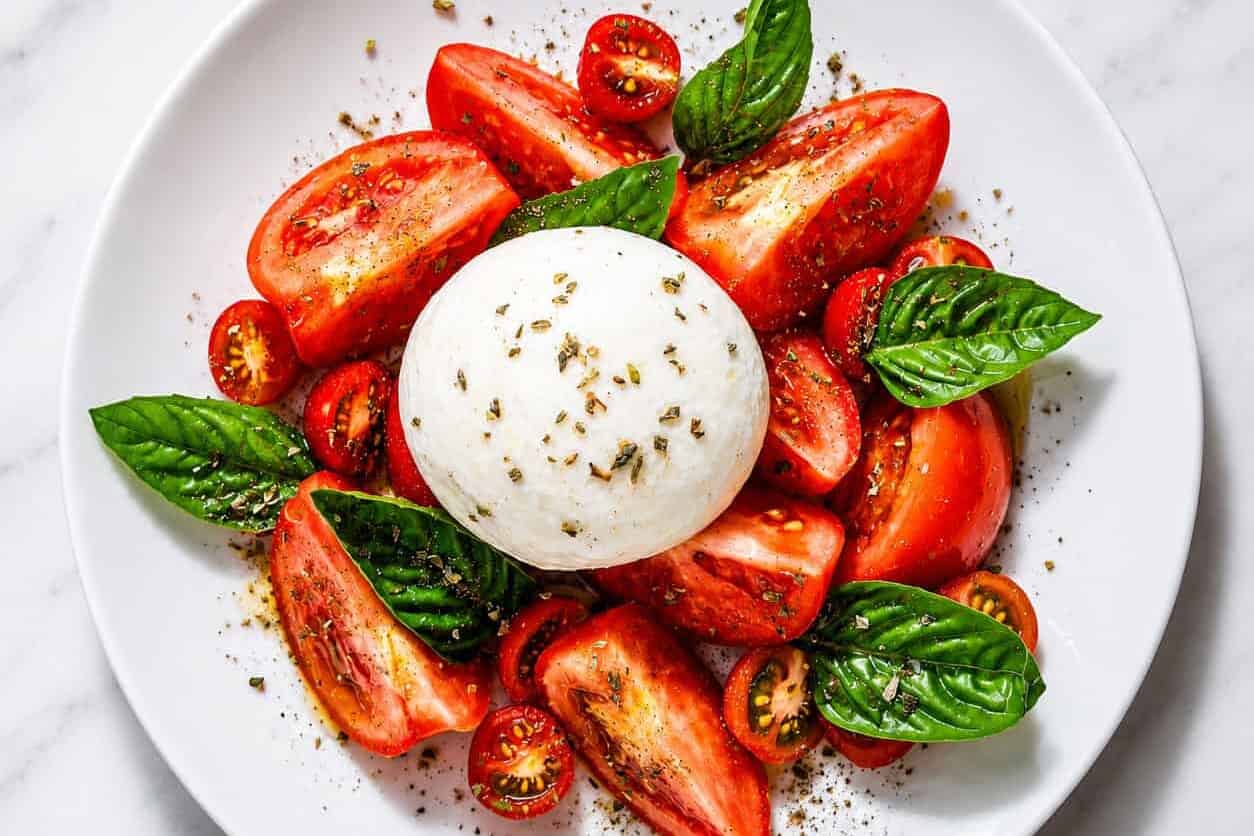
At Via Napoli Pizzeria, Sydney’s Neapolitan Pizzeria, walk into the kitchen and you’ll find two kinds of mozzarella treated very differently. One is everyday — reliable, melts cleanly, does its job. The other is softer, wetter, and alive in a way the first one isn’t: glossy and delicate with a faint tang, built to be eaten the same day it’s made. That second one is buffalo mozzarella, and understanding what makes it different is understanding a good part of what makes Neapolitan food taste the way it does.
Via Napoli Pizzeria, a Neapolitan pizza restaurant with locations in Surry Hills and Lane Cove, Sydney, runs buffalo mozzarella and its close relatives — buffalo ricotta and buffalo bocconcini — through several of the most important dishes on the menu at both our Surry Hills pizzeria and the Italian restaurant on Longueville Road, each selected because of what that cheese does in a particular context. This is a closer look at what it is, where it comes from, and why it matters.
What Is Buffalo Mozzarella?
Buffalo mozzarella is a fresh Italian cheese made from the milk of water buffalo, not cows — softer, wetter, and tangier than standard mozzarella, with a richness that comes directly from the milk itself. The texture is loose and yielding: a good piece tears rather than slices cleanly, releases a little milky liquid when cut, and has a faint layered structure inside rather than a uniform rubbery bite.
The most recognised version is Mozzarella di Bufala Campana, which carries PDO (Protected Designation of Origin) status — a legal guarantee that it was made in a defined area of southern Italy, predominantly Campania, using traditional methods and genuine Italian Mediterranean buffalo milk. The designation has been protected under EU law since 1996, following Italy’s own Denominazione di Origine recognition in 1993. Not all buffalo mozzarella carries this designation, but the Campana standard is the benchmark against which the rest of the category is measured.
Buffalo Mozzarella vs Fior di Latte — What’s the Difference?
Fior di latte is cow’s milk mozzarella — firmer, milder, and more stable under heat — while buffalo mozzarella is made from Italian Mediterranean buffalo milk and has a richer, tangier flavour with a softer, wetter texture. Both are produced using the same pasta filata stretching method, but the milk source changes the result significantly.
The practical difference matters in the kitchen. Fior di latte holds its shape better under the intense heat of a wood-fired oven — it’s the standard choice for most Neapolitan pizzas because it doesn’t release excess moisture onto the base. Buffalo mozzarella, by contrast, is wetter and richer, which makes it ideal for dishes where it’s used raw or barely warmed: a Caprese salad, an antipasto plate, or a pizza where that creaminess is the central point rather than a structural challenge.
Neither is objectively superior. A kitchen that understands both knows exactly when to reach for each one.
How Buffalo Mozzarella Is Made
Buffalo mozzarella is made using the pasta filata method — a process of acidifying fresh buffalo milk curd, then pouring hot water over it to create a pliable mass that is stretched, spun, and shaped into balls before being cooled in cold water and stored in whey.
The curd is left to acidify in tubs until it reaches a pH of approximately 4.95 — the precise point at which it becomes elastic enough to stretch properly. Hot water is poured over it, transforming it into the smooth, glossy dough that gives the cheese its characteristic texture. It is then shaped — traditionally by hand, commercially by rotating shaper machines — cooled in cold water, and pickled in the original whey before packaging.
Because buffalo milk is nutritionally richer than cow’s milk — containing roughly 8% fat and 4.6% protein compared to approximately 3.5% fat and 3.2% protein in cow’s milk — it takes only around 5 kg of buffalo milk to produce 1 kg of cheese. The equivalent process with cow’s milk requires approximately 8 kg. That concentration of richness is the direct reason the finished cheese tastes the way it does.
The Tradition Behind Buffalo Mozzarella
Water buffalo have been farmed in southern Italy for centuries, with the earliest written references to cheese made from their milk dating to the 12th century. The Campania region — particularly the provinces of Caserta and Salerno, in the low-lying land surrounding Naples — became the heartland of production, and it remains so today.
The cheese was built around freshness and locality: made from the morning’s milk, shaped by hand, and eaten the same day. DOP production rules for Mozzarella di Bufala Campana still require that milk be processed within 60 hours of collection — which is why even now, with global distribution making it available in Sydney as readily as in Naples, the best buffalo mozzarella behaves like something that knows it has a deadline. The Consorzio per la Tutela del Formaggio Mozzarella di Bufala Campana, a consortium of approximately 200 producers, oversees the protection and production standards under Italian law.
Buffalo Mozzarella at Via Napoli
On the dine-in menu, buffalo mozzarella and its relatives appear across several dishes, each using the cheese in a way suited to how it behaves under different conditions.
Margherita
The Margherita is built on Solania San Marzano tomatoes, buffalo mozzarella, Pecorino Romano, Grana Padano DOP, basil, and EVOO. This is the dish where buffalo mozzarella’s character matters most — its tang and creaminess against the sweetness of San Marzano tomato is the entire point. The combination has barely changed in well over a century, and for good reason.
Insalata Caprese
Vine-ripened tomatoes, buffalo mozzarella, basil, and EVOO — nothing else. Buffalo mozzarella completely exposed, with no cooking and nowhere to hide. If the cheese isn’t right, the dish doesn’t work. It’s the simplest test of quality on the entire menu.
Parmigiana di Melanzane
Layers of golden-fried eggplant, San Marzano tomato sauce, melted buffalo mozzarella, and Grana Padano DOP, baked until everything binds. Here the cheese does something completely different — melting through the dish rather than sitting on top, adding richness rather than presence.
Truffle and Bocconcini Pizzas
The Truffle pizza pairs buffalo mozzarella with buffalo bocconcini, pancetta, and black truffle on a white base — a richer direction that leans into the cheese’s depth. The Bocconcini pizza takes a similarly restrained approach, letting buffalo bocconcini and black truffle do the work over a San Marzano base.
Buffalo Ricotta
Made from the whey left over in buffalo mozzarella production, buffalo ricotta is lighter and creamier than cow’s milk ricotta. It appears in the Calzone, the Vesuvio pizza, Fiori di Zucca, and several pizza fritta varieties — its lightness balancing richer ingredients like cured meats throughout.
How to Choose and Serve Buffalo Mozzarella
Good buffalo mozzarella yields gently when cut, releases a small pool of milky whey, has a bright white colour, and carries a light lactic tang rather than a sharp sourness. Those four things together tell you whether a piece is fresh enough to eat as it is.
Texture — it should tear rather than slice cleanly. A rubbery bounce suggests it’s either too old or made using a different process.
Liquid — a small amount of whey released when cut is a sign of freshness, not excess moisture. Bone-dry buffalo mozzarella has usually been out of its liquid too long.
Colour — bright white throughout. Yellowing at the edges signals age.
Flavour — a clean lactic tang is correct and desirable. Sharp or off notes mean the cheese has turned.
Serving — remove buffalo mozzarella from the fridge 20 to 30 minutes before eating. The texture relaxes at room temperature and the flavour opens up considerably; cold buffalo mozzarella is noticeably muted compared to what it becomes with a little time.
If you’ve spent time at Via Napoli Pizzeria — Surry Hills and Lane Cove, Sydney — you’ve likely already tasted buffalo mozzarella in more than one form without quite registering it. Which is, in its own way, exactly how it’s meant to work. It’s there to carry the dish, not announce itself — except in the places, like the Caprese or the Margherita, where it gets to be the whole story.
Frequently Asked Questions
What is buffalo mozzarella?
Buffalo mozzarella is a fresh Italian cheese made from the milk of water buffalo rather than cows. It is softer, wetter, and tangier than cow’s milk mozzarella (fior di latte), with a loose, yielding texture and a rich lactic flavour. The most prized version — Mozzarella di Bufala Campana — is produced in Campania, southern Italy, and holds EU Protected Designation of Origin (PDO) status, in force since 1996.
What is the difference between buffalo mozzarella and fior di latte?
Buffalo mozzarella is made from Italian Mediterranean water buffalo milk and has a richer, tangier flavour with a softer, wetter texture. Fior di latte is mozzarella made from cow’s milk — firmer, milder, and better suited to high-heat cooking because it releases less moisture. In Neapolitan kitchens, fior di latte is the standard choice for most pizzas, while buffalo mozzarella is reserved for raw dishes or preparations where its creaminess is the central ingredient.
What is Mozzarella di Bufala Campana?
Mozzarella di Bufala Campana is a PDO-protected buffalo mozzarella produced in a defined area of southern Italy — primarily the Campania provinces of Caserta and Salerno — using traditional pasta filata methods and genuine Italian Mediterranean buffalo milk. The designation was granted denominazione di origine status in Italy in 1993 and EU Protected Designation of Origin (PDO) status in 1996. It is overseen by the Consorzio per la Tutela del Formaggio Mozzarella di Bufala Campana, a consortium of approximately 200 producers.
How is buffalo mozzarella made?
Buffalo mozzarella is made using the pasta filata method. Fresh buffalo milk curd is acidified in tubs to a pH of approximately 4.95, then hot water is poured over it to soften it into a smooth, elastic mass that is stretched and shaped into balls. The balls are cooled in cold water, then stored in whey. Because buffalo milk contains roughly 8% fat — compared to approximately 3.5% in cow’s milk — only around 5 kg of buffalo milk is needed to produce 1 kg of finished cheese.
Is buffalo mozzarella the same as regular mozzarella?
No. Regular mozzarella (often labelled fior di latte) is made from cow’s milk and is firmer with a milder flavour. Buffalo mozzarella is made from water buffalo milk, which contains roughly 8% fat and 4.6% protein — significantly richer than cow’s milk at approximately 3.5% fat. The result is a softer, wetter, tangier cheese. Both types are made using the pasta filata stretching technique, but the milk source produces two distinctly different products.
How should buffalo mozzarella be stored and served?
Buffalo mozzarella should be kept refrigerated in its whey or brine and consumed by the use-by date — typically within a few days of purchase. Before serving, remove it from the fridge 20 to 30 minutes in advance; the texture relaxes and the flavour opens up considerably when not cold. Buffalo mozzarella is best served simply — with ripe tomato, fresh basil, and good extra virgin olive oil — or on a pizza where its richness balances other ingredients.
Where can I try buffalo mozzarella in Sydney?
Via Napoli Pizzeria serves buffalo mozzarella at its Surry Hills (628 Crown Street) and Lane Cove (141 Longueville Road) restaurants in Sydney. It features on the Margherita pizza, the Insalata Caprese, and the Parmigiana di Melanzane on the dine-in menu. Buffalo bocconcini and buffalo ricotta — made from the same milk — also appear in the Calzone, the Vesuvio pizza, Fiori di Zucca, and several pizza fritta varieties.

Via Napoli is Sydney’s home of authentic Neapolitan pizza, founded by Naples-born pizzaiolo Luigi Esposito. Luigi grew up in Naples helping his grandmother sell pizza fritta on the streets before training in professional kitchens and mastering the craft of traditional Neapolitan pizza-making. He brought those traditions to Sydney when he opened Via Napoli in Lane Cove in 2011 — introducing the city to properly wood-fired Neapolitan pizza: long-fermented dough, premium Italian ingredients, and high-temperature ovens that produce the soft, airy, charred crust that defines the real thing.
Now with two locations in Surry Hills and Lane Cove, Via Napoli is one of Sydney’s most-searched Italian restaurants and a Gambero Rosso Top Italian Restaurants 2026 recipient. This blog draws on over a decade of hands-on experience with Neapolitan pizza to cover the craft and culture behind what we do — from dough fermentation and regional pizza traditions to menu guides, dining occasions and the people who make it all happen.