
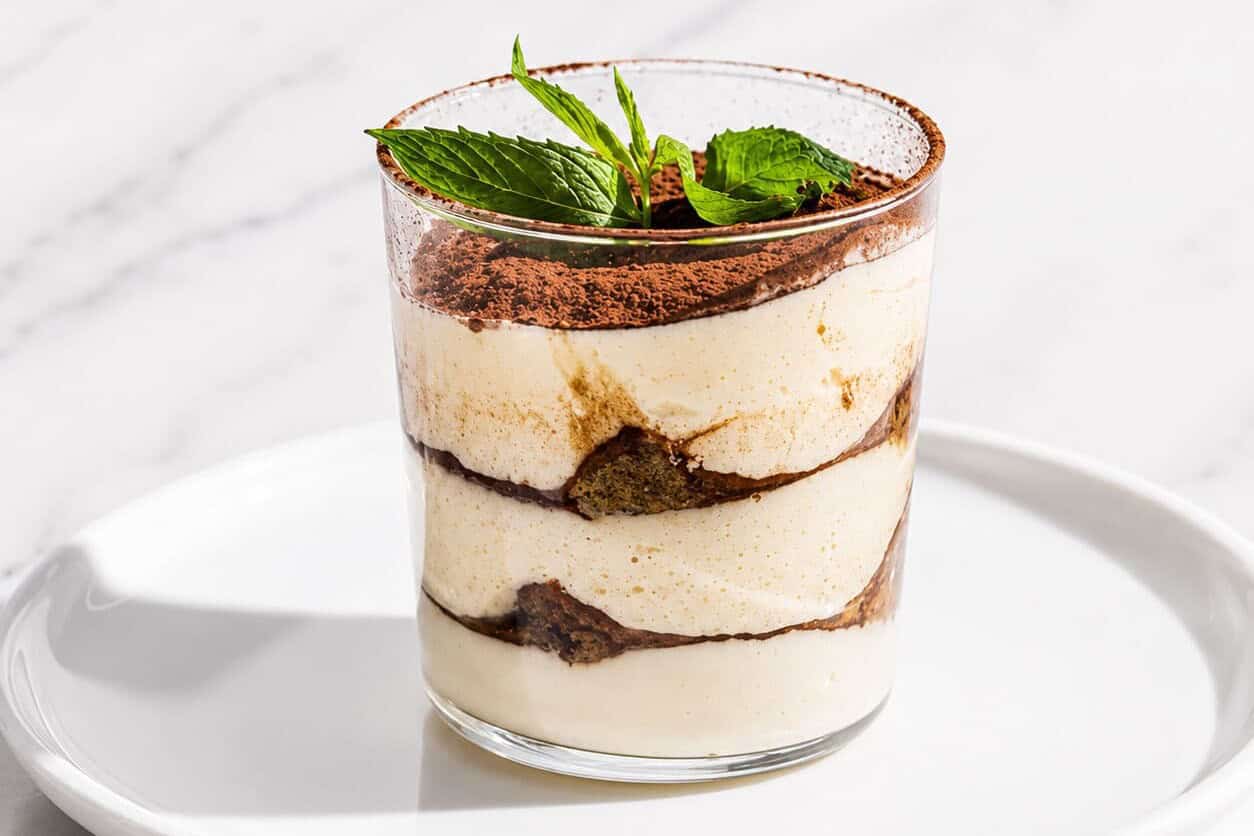
At Via Napoli, an Italian Restaurant in Sydney, tiramisù has been on the menu since the beginning — made in-house the way it has always been made in Italy. Via Napoli Pizzeria, a Neapolitan pizza restaurant with locations in Surry Hills and Lane Cove, Sydney, makes it at both Via Napoli Pizzeria Surry Hills and Via Napoli, an Italian restaurant in Lane Cove. It’s also one of Italy’s most searched and most misrepresented desserts: a simple thing in the right hands, an entirely different experience when shortcuts have been taken. This guide covers what tiramisù is, where it comes from, what should go into an honest one, and how to tell the difference.
What Is Tiramisù?
Tiramisù is a layered Italian dessert made from espresso-soaked savoiardi biscuits and a cream of mascarpone, egg yolks, and sugar, finished with a dusting of bitter cocoa. It requires no baking — the layers are assembled cold and left to set in the refrigerator, which allows the biscuits to soften and the cream to firm without losing its lightness. The result is at once rich and airy, with the coffee cutting through the sweetness of the mascarpone and the cocoa providing a dry, bitter finish.
Six ingredients. No oven. No shortcuts. That’s the formula — and when it’s done correctly, it earns its reputation as one of the great Italian desserts alongside burrata and tiramisu’s northern neighbour, panna cotta.
What Does Tiramisù Mean?
Tiramisù means “pick me up” in Italian, from three words: tirare (to pull), mi (me), and sù (up). The name refers to the restorative effect of the espresso and sugar at its core — a dessert historically associated with restoring energy after the effort of a long Italian meal.
The accent on the final u — tiramisù — is the standard Italian form. English menus routinely drop it, but the dessert and its name are the same thing. The Treviso tourist office has noted that “tiramisù” is among the five most recognisable Italian words internationally, an unusual distinction for a dessert that didn’t exist in its current form until the second half of the twentieth century.
Where Did Tiramisù Come From?
Tiramisù’s most widely accepted origin is Treviso, a city in the Veneto region of northern Italy. Le Beccherie restaurant in Treviso claims to have been the first to list tiramisù on a menu, in 1972. The recipe — made with six specific ingredients and no alcohol — was filed with the Italian Academy of Cuisine via notarial deed in 2010, and the Accademia del Tiramisù was formally established in Treviso in 2011. It hosts an annual Tiramisù World Cup and Tiramisù Day, both held in the city.
A rival claim comes from Friuli-Venezia Giulia, the neighbouring region to the northeast, which has produced evidence of versions of the dessert from the 1950s, documented in a 2016 book on the subject. The dispute has never been formally resolved. Treviso’s case remains the most formally documented: the notarial deed, the Academy, the competitive events. Whether that settles the argument depends on how much weight you give to paperwork versus tradition.
What’s less contested is that tiramisù remained largely unknown outside the Veneto until the 1970s, and became an international fixture only in the 1980s and 1990s — a remarkably recent arrival for a dessert that now feels like it has always been there.
What Goes Into an Authentic Tiramisù?
The traditional Treviso recipe uses exactly six ingredients: savoiardi biscuits, strong espresso, mascarpone, egg yolks, granulated sugar, and bitter cocoa. No cream. No liqueur. No substitutes.
Savoiardi — the dry, finger-shaped biscuits that form the layers — are briefly dipped in espresso before assembly. The timing is precise: too brief and they stay dry at the centre; too long and they become waterlogged and collapse. The mascarpone cream is made by whisking egg yolks and sugar together until pale, then folding through the mascarpone to create a cream that holds its shape without becoming dense.
Mascarpone is a triple-cream cheese from Lombardy, made by heating cream and introducing an acid to thicken it. Its fat content — typically 60 to 75 per cent — is what gives tiramisù its body and its characteristic richness. Substituting cream cheese or double cream changes the chemistry of the dessert in ways that are immediately apparent in the texture.
Many modern versions add Marsala wine, coffee liqueur, or rum — and many of those versions are good. The traditional Treviso recipe uses none of these. Which version a kitchen makes is worth asking: the difference between an alcohol-free tiramisù and one made with Marsala is not subtle.
What Sets a Good Tiramisù Apart?
What distinguishes a genuine tiramisù from an adequate one comes down to three decisions: the strength of the espresso, the ratio of egg yolk to mascarpone, and how long the dessert has rested before serving.
The espresso sets the coffee flavour in the savoiardi layer. Weak espresso produces a bland result; the bitterness needs to be present and forward. The mascarpone cream must be properly aerated — whisked enough to hold structure, but not so much that it loses its softness. And the rest time matters: a tiramisù served too soon is a different dessert to one made the day before. The layers need time to settle. The cocoa needs time to absorb moisture and soften against the cream. Overnight in the refrigerator is not optional; it’s part of the method.
The cocoa itself matters too. Sweetened cocoa powder produces a noticeably different result to bitter, unsweetened cocoa. The bitter finish is what keeps the dessert in balance. Take it away, and what remains is sweet all the way down.
Tiramisù at Via Napoli
Via Napoli Pizzeria, at 628 Crown Street, Surry Hills and 141 Longueville Road, Lane Cove, Sydney, makes its tiramisù in-house. Espresso-soaked savoiardi, lightly sweetened mascarpone, bitter cocoa — done without embellishment, which is exactly how it should be done.
Luigi Esposito, the third-generation Neapolitan pizzaiolo who founded Via Napoli, holds the same view of dessert as he does of dough: the right ingredients, used correctly, do not need improving. Via Napoli was recognised in the Gambero Rosso Top Italian Restaurants 2026 guide — a distinction that reflects the full meal, dolci included.
Most tables skip dessert. The ones that don’t are right.
Reserve a table at Via Napoli →
Frequently Asked Questions
What does tiramisù mean in Italian?
Tiramisù means “pick me up” in Italian. The name comes from three words: tirare (to pull), mi (me), and sù (up), referring to the restorative effect of the espresso and sugar at the heart of the dessert.
Where does tiramisù come from?
Tiramisù is most widely attributed to Le Beccherie restaurant in Treviso, in the Veneto region of northern Italy, which claims to have first listed it on a menu in 1972. The recipe was filed with the Italian Academy of Cuisine via notarial deed in 2010, and the Accademia del Tiramisù was formally established in Treviso in 2011. A rival origin claim exists from Friuli-Venezia Giulia, citing documented versions from the 1950s, but Treviso’s claim remains the most formally recorded.
Does tiramisù contain alcohol?
The traditional Treviso tiramisù contains no alcohol — only savoiardi biscuits, espresso, mascarpone, egg yolks, granulated sugar, and bitter cocoa. Many modern restaurant versions add Marsala wine, coffee liqueur, or rum. If you are avoiding alcohol, it is worth asking the kitchen which version they make. Via Napoli’s tiramisù contains no alcohol.
Is tiramisù served warm or cold?
Tiramisù is always served cold, directly from the refrigerator. The dessert is assembled in layers and then chilled for several hours — ideally overnight — to allow the savoiardi to soften and the mascarpone cream to set. Serving it at room temperature compromises both the texture and the flavour.
Does tiramisù contain raw eggs?
Traditional tiramisù uses raw egg yolks whisked with sugar to form the base of the mascarpone cream. The eggs are incorporated without being cooked or pasteurised. This is the method used in the original Treviso recipe and in most restaurant versions that follow the traditional approach.
Can I eat tiramisù when pregnant?
Traditional tiramisù contains raw egg yolks, and some versions include alcohol — both of which are typically avoided during pregnancy. Via Napoli’s tiramisù contains no alcohol, but does use the traditional egg yolk method. It is worth asking the kitchen directly when you book if this is a consideration.
What is the difference between tiramisù and tiramisu cake?
Tiramisù is the classic Italian dessert made from layers of espresso-soaked savoiardi biscuits and mascarpone cream, finished with bitter cocoa. Tiramisu cake refers to a baked sponge cake flavoured with the same elements — espresso, mascarpone, and cocoa — but constructed as a layered cake rather than the traditional no-bake assembly. The flavour profile is similar; the texture and method are different.
How long does tiramisù keep in the fridge?
Tiramisù keeps well in the refrigerator for two to three days. Because it contains raw egg yolks and mascarpone, it should be covered and kept cold throughout. The flavour typically improves after the first day, as the coffee flavour deepens through the savoiardi layers and the cream firms further.

Via Napoli is Sydney’s home of authentic Neapolitan pizza, founded by Naples-born pizzaiolo Luigi Esposito. Luigi grew up in Naples helping his grandmother sell pizza fritta on the streets before training in professional kitchens and mastering the craft of traditional Neapolitan pizza-making. He brought those traditions to Sydney when he opened Via Napoli in Lane Cove in 2011 — introducing the city to properly wood-fired Neapolitan pizza: long-fermented dough, premium Italian ingredients, and high-temperature ovens that produce the soft, airy, charred crust that defines the real thing.
Now with two locations in Surry Hills and Lane Cove, Via Napoli is one of Sydney’s most-searched Italian restaurants and a Gambero Rosso Top Italian Restaurants 2026 recipient. This blog draws on over a decade of hands-on experience with Neapolitan pizza to cover the craft and culture behind what we do — from dough fermentation and regional pizza traditions to menu guides, dining occasions and the people who make it all happen.