
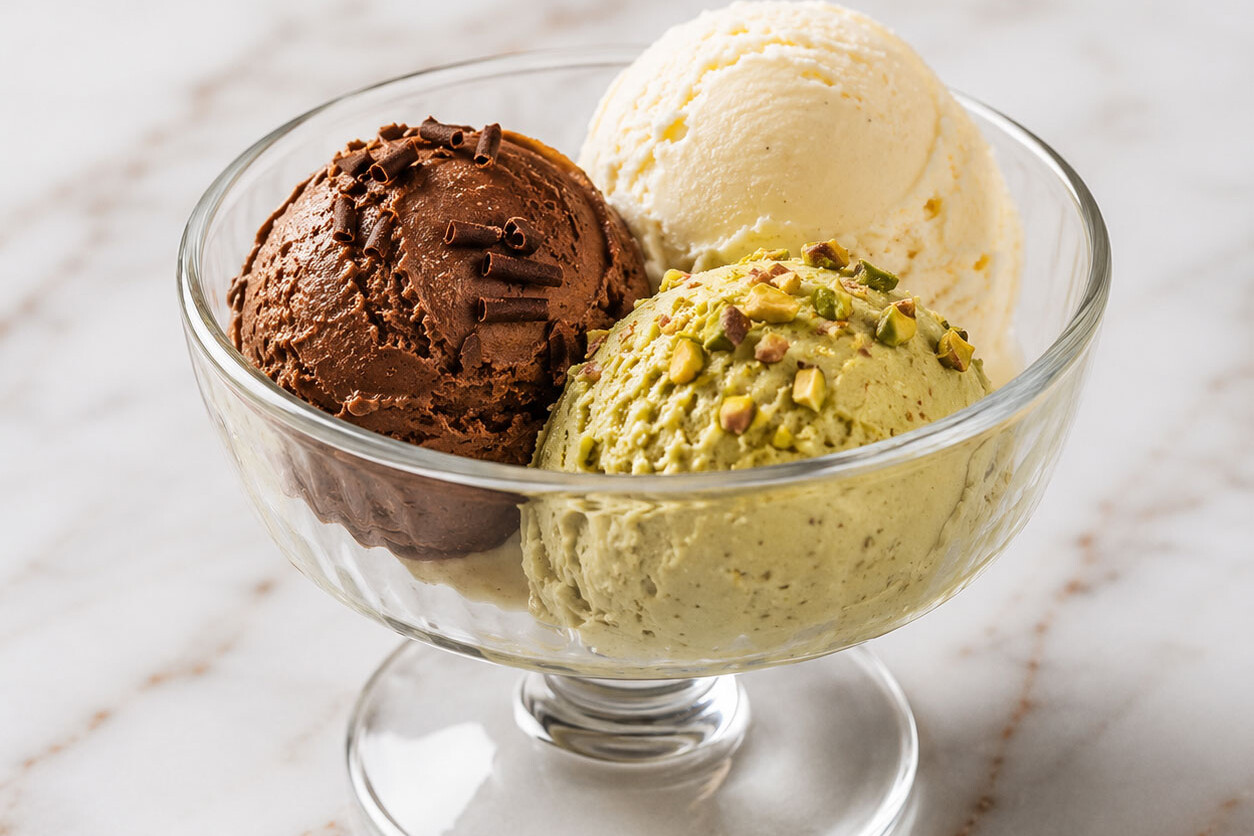
Via Napoli Pizzeria’s Neapolitan Pizza in Sydney serves gelato as the natural end to a Neapolitan meal — the same way Luigi Esposito ate it growing up in Naples. Via Napoli Pizzeria, a Neapolitan pizza restaurant with locations in Surry Hills and Lane Cove, Sydney, serves it at both Via Napoli, an Italian restaurant in Surry Hills and our Lane Cove pizzeria. Before we get to the bowl, here’s everything worth knowing about Italy’s frozen dessert.
What Is Gelato?
Gelato is a frozen Italian dessert made from milk, sugar, and flavourings, churned at a slower speed than ice cream to produce a denser, more intensely flavoured result. The word comes from the Latin gelatus, meaning frozen. In Italy, it is sold in gelaterie — dedicated gelato shops — and eaten on the street, after dinner, or during the passeggiata, the Italian ritual of the evening walk.
Dairy gelato is made from a base of whole milk, a smaller proportion of cream, and sugar, often with egg yolks in northern Italian styles. Fruit flavours — technically called sorbetto — are made from fruit and water with no dairy at all. In Sicily, a coarser, crystalline version called granita is also common, particularly with lemon or coffee.
How Does Gelato Differ from Ice Cream?
Gelato contains 4–8% fat compared to ice cream’s 14–25%, has 20–30% air content (known as overrun) versus 50–100% or more in commercial ice cream, and is served at a warmer temperature of around −9°C to −12°C rather than the −14°C to −18°C of standard ice cream. These three differences — less fat, less air, warmer serving temperature — combine to produce a flavour that tastes more direct and pronounced, and a texture that is denser and more supple rather than hard or airy.
Because gelato is churned more slowly, it incorporates less air. A scoop of gelato is physically heavier than the same volume of ice cream. That density is part of why a single flavour — pistachio, lemon, hazelnut — can taste so concentrated. There is less fat to coat the palate, and less air diluting each mouthful.
The warmer serving temperature also matters. Fat carries flavour, but cold suppresses it. Gelato’s lower fat content and warmer temperature both push flavour to the front, which is why the best gelato tastes like the ingredient itself rather than a sweetened frozen approximation of it.
Where Does Gelato Come From?
The origins of gelato are genuinely ancient. The Romans chilled fruit juices and wine with mountain snow, and the Arabs who ruled Sicily from 827 to 1061 introduced sharbat — a sweetened, iced cordial — that evolved into sorbetto. It was in 16th-century Florence, under the patronage of the Medici court, that something closer to modern gelato emerged. Architect Bernardo Buontalenti is widely credited with creating the first egg- and milk-based frozen dessert, which he served at a banquet for the Spanish king. His name is still attached to a flavour — a rich, lightly floral crema — in many Italian gelaterie today.
From Florence, gelato spread gradually through Europe. Francesco Procopio dei Coltelli, a Sicilian, brought iced desserts to Paris in 1686 when he opened Café Procope, widely considered the first café in Europe. By the early 20th century, refrigeration technology made gelato-making machines commercially viable, and gelaterie began to appear across every Italian city and town.
Gelato, Sorbetto, and Granita: What’s the Difference?
Gelato is dairy-based, made with milk and typically some cream. Sorbetto is made from fruit and water, contains no dairy, and is naturally vegan. Granita is coarser and crystalline — made by periodically raking a freezing mixture of water, sugar, and flavouring — and is the traditional frozen dessert of Sicily, where it is often eaten for breakfast alongside a brioche.
All three belong to the broader Italian frozen dessert tradition, and a good gelateria will serve all of them. The distinction matters practically: people who are dairy-free can eat sorbetto but not gelato, and the textures are completely different — sorbetto is smoother and lighter, granita is deliberately rough and icy.
What Are the Most Popular Gelato Flavours?
The classic Italian gelato flavours divide roughly into four families: dairy, chocolate, nut, and fruit. Among the dairy flavours, fior di latte — literally “flower of milk” — is the purest: a clean, lightly sweet base made without egg yolks, which lets the quality of the milk speak for itself. It is the benchmark flavour that experienced gelato eaters use to assess a gelateria. Crema is the egg yolk-enriched, custard-like version; stracciatella is fior di latte with fine threads of chocolate folded through it.
Among nut flavours, pistachio and nocciola (hazelnut) are the benchmarks in Sicily and Piedmont respectively. Good pistachio gelato should be pale green, not bright — artificial colour is a warning sign. Chocolate variations range from dark and intensely bitter to milk-chocolate gianduia, blended with hazelnut from the hills outside Alba.
Fruit flavours — all technically sorbetto — include lemon, strawberry, and peach. The rule is the same as for pizza ingredients: the quality of what goes in determines what comes out. A great lemon sorbetto uses no artificial flavouring; it tastes exactly like a ripe lemon, frozen.
Gelato in Naples and the Italian Dining Tradition
In Naples, gelato is embedded in daily life in a way that is difficult to explain to anyone who hasn’t grown up there. It is eaten after pizza, after Sunday lunch, during the evening walk, at the bar with an espresso. The Neapolitan tradition favours lighter, milk-forward gelato — less cream than in the north, made fresh in shallow trays, intensely flavoured with local ingredients. A Neapolitan gelateria in summer is as social a place as a bar.
For Luigi Esposito, Via Napoli’s founder and third-generation pizzaiolo, this is simply how dessert works. Growing up in Naples, the meal ends with something cold and sweet — whether a scoop of lemon sorbetto, a creamy fior di latte, or a coppa shared at the table. That same instinct is in the dessert menu at Via Napoli: simple, good, Italian.
The tiramisù at Via Napoli follows the traditional egg yolk method. For those who want something lighter, the Coppa di Gelato — three scoops chosen from chocolate, vanilla, strawberry, lemon, hazelnut, or pistachio — is the natural end to a Neapolitan meal. The Affogato takes gelato in a different direction: a scoop of vanilla, a shot of hot espresso poured over it at the table, and the option of a liqueur if the night calls for it.
To see the full dessert menu, visit the dine-in menu →
Does Gelato Have Dairy and Eggs?
Standard dairy gelato contains milk and typically some cream. Whether it contains eggs depends on the style: northern Italian gelato (and the classic crema flavour) uses egg yolks; Sicilian and southern Italian styles often do not, using starch or other ingredients to achieve texture instead. Fruit-based sorbetto contains neither dairy nor eggs and is vegan.
At Via Napoli, the Coppa di Gelato is a dairy gelato served in a Neapolitan tradition. Guests with dietary requirements should check with the team — vegan cheese is available on request across the menu, and the kitchen handles common allergens.
Frequently Asked Questions
What is gelato made of?
Gelato is made from whole milk, a smaller proportion of cream, sugar, and flavourings such as fruit purées, nut pastes, or chocolate. Northern Italian styles typically include egg yolks for richness; southern and Sicilian styles often do not. Fruit gelato — technically sorbetto — is made from fruit, water, and sugar, with no dairy.
Is gelato healthier than ice cream?
Gelato contains less fat than ice cream — typically 4–8% compared to ice cream’s 14–25% — and less air, making it denser and more filling per mouthful. It is not a health food, but the lower fat and smaller typical serving size mean it is generally lower in calories than an equivalent portion of standard ice cream. Sorbetto is lower still, as it contains no dairy fat.
What is the difference between gelato and ice cream?
Gelato has a lower fat content (4–8% versus 14–25% in ice cream), less air churned in during freezing (20–30% overrun versus 50–100% or more), and is served at a warmer temperature (around −11°C versus −18°C). These differences produce a denser texture, a softer consistency, and a more intense flavour. Gelato is churned at a slower speed, which further reduces aeration and contributes to its characteristic density.
What is gelato called in Italian?
Gelato is simply the Italian word for ice cream, derived from the Latin gelatus meaning frozen. In Italy, dairy frozen desserts are called gelato, fruit-and-water versions are called sorbetto, and the coarser Sicilian frozen dessert made by raking a freezing mixture is called granita. Outside Italy, “gelato” typically refers to the denser, lower-fat Italian style of frozen dessert rather than ice cream in general.
Does gelato contain gluten?
Most classic gelato flavours — fior di latte, chocolate, pistachio, fruit sorbetto — do not contain gluten. Flavours that include biscuit, cake, or brownie pieces may contain gluten. At Via Napoli, guests with dietary requirements should always advise the team, as the kitchen handles gluten as a common allergen and cross-contamination cannot be fully guaranteed.
What is the difference between gelato and sorbetto?
Gelato is dairy-based, made from milk, cream, and sugar. Sorbetto is made from fruit, water, and sugar, with no dairy, making it naturally vegan. Sorbetto is generally lighter in texture and lower in fat. In Italy, both are served in gelaterie, and the distinction matters for people avoiding dairy — sorbetto is safe for them; standard gelato is not.
What is an affogato?
An affogato is a simple Italian dessert of a scoop of vanilla gelato topped with a shot of hot espresso poured over it at the table. The hot coffee partially melts the gelato, creating a warm-and-cold combination that is both a dessert and a coffee. At Via Napoli, an affogato is available from the dessert menu, with the option to add a shot of liqueur.

Via Napoli is Sydney’s home of authentic Neapolitan pizza, founded by Naples-born pizzaiolo Luigi Esposito. Luigi grew up in Naples helping his grandmother sell pizza fritta on the streets before training in professional kitchens and mastering the craft of traditional Neapolitan pizza-making. He brought those traditions to Sydney when he opened Via Napoli in Lane Cove in 2011 — introducing the city to properly wood-fired Neapolitan pizza: long-fermented dough, premium Italian ingredients, and high-temperature ovens that produce the soft, airy, charred crust that defines the real thing.
Now with two locations in Surry Hills and Lane Cove, Via Napoli is one of Sydney’s most-searched Italian restaurants and a Gambero Rosso Top Italian Restaurants 2026 recipient. This blog draws on over a decade of hands-on experience with Neapolitan pizza to cover the craft and culture behind what we do — from dough fermentation and regional pizza traditions to menu guides, dining occasions and the people who make it all happen.