
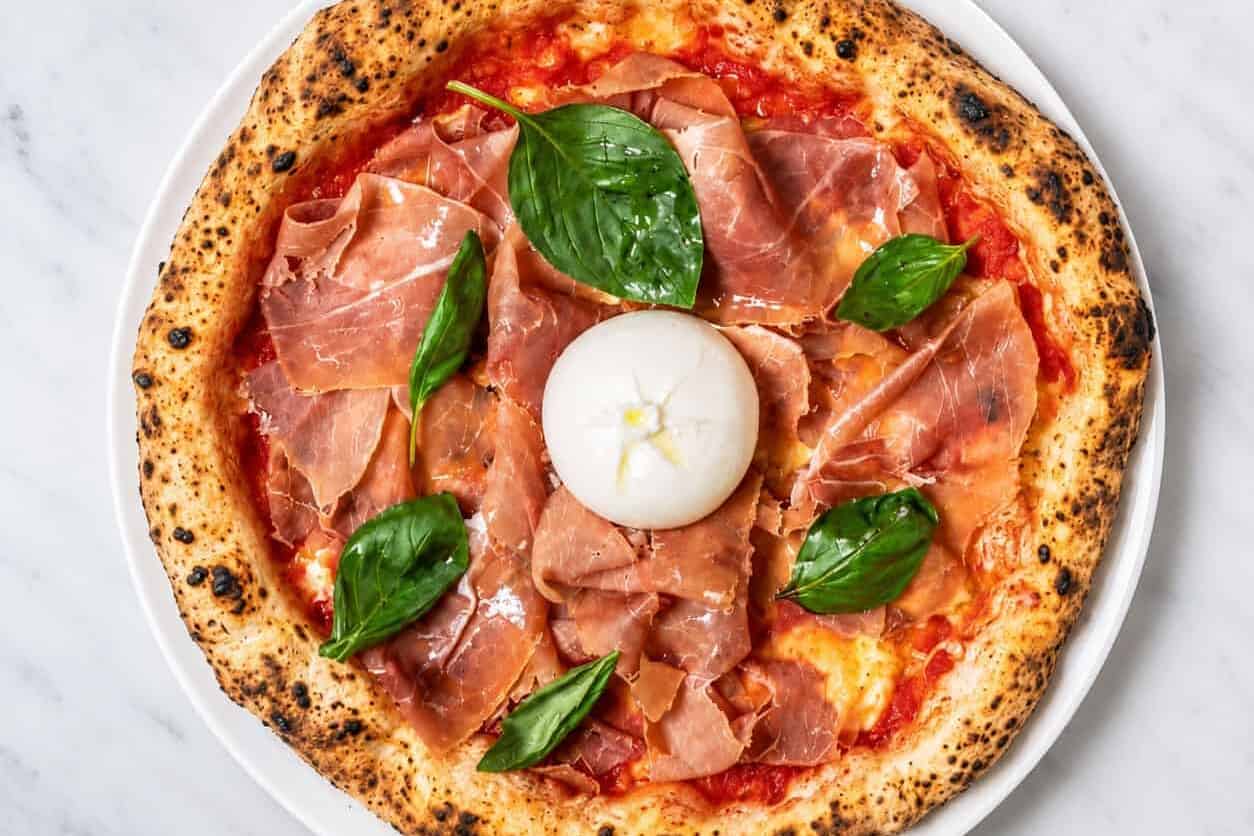
When a word does triple duty, confusion is almost guaranteed. At Via Napoli, an Italian Restaurant in Sydney, stracciatella appears on the dine-in menu in the form of burrata — the Pugliese cheese whose creamy interior is, technically, stracciatella. It’s not a complicated idea. But because the word refers to three entirely different Italian preparations, understanding what you’re eating and why it tastes the way it does requires a brief detour through Roman kitchens, a dairy in Puglia, and a gelateria in Bergamo.
Via Napoli Pizzeria, a Neapolitan pizza restaurant with locations in Surry Hills and Lane Cove, Sydney — recognised in the Gambero Rosso Top Italian Restaurants 2026 guide — has been built around ingredients with genuine Italian provenance. That’s true at both Via Napoli, an Italian restaurant in Surry Hills and our Lane Cove pizzeria. Founder Luigi Esposito, a third-generation pizzaiolo from Naples, treats the sourcing of fresh dairy as carefully as the sourcing of anything else on the menu. Stracciatella, in all its forms, is worth understanding properly.
What Is Stracciatella?
Stracciatella is the Italian word for “little shreds” or “little rags,” derived from the verb stracciare — to tear or shred. The word describes three distinct Italian preparations: a fresh cow’s milk cheese from Puglia, a soft-boiled egg soup from Rome, and a chocolate-threaded gelato flavour that originated in Bergamo in 1961. All three share the same name and the same logic: each involves something being torn, shredded, or broken into irregular pieces, and the name follows from that.
Of the three, the cheese is the most significant for Italian restaurant dining — and the least widely understood, largely because it spends most of its life hidden inside burrata.
Stracciatella Cheese: What It Is and Where It Comes From
Stracciatella cheese is a fresh, soft Italian cheese from Puglia — the region that forms the heel of the Italian boot. It was developed in the Andria area of Puglia in the early twentieth century, initially as a way to use the shredded scraps left over from mozzarella production rather than discard them. Combined with fresh cream, those torn strands became something distinctly worth eating in their own right.
The cheese is made using the pasta filata method — the same stretched-curd technique used for fior di latte and mozzarella. Fresh curd is heated in near-boiling water to around 85–90°C, then stretched and pulled until it develops the smooth, elastic quality characteristic of all pulled-curd Italian cheeses. For stracciatella, instead of being formed into a uniform ball, the stretched curd is torn into long, irregular strands — those characteristic “little rags” — and then combined immediately with rich fresh cream while both are still warm. The result is a loose, flowing mixture: soft, rich, and distinctly layered in texture rather than smooth and homogeneous.
In Puglia, the cheese is scooped and sold in small containers, served simply with olive oil and sea salt, spooned onto toasted bread, or combined with vine-ripened tomatoes. The province of Foggia is also known for a buffalo milk version, made from the same animal that produces buffalo mozzarella — richer, slightly stronger in character, and even shorter-lived than the cow’s milk variety.
Stracciatella vs Burrata: What’s the Difference?
Burrata is stracciatella enclosed within a stretched mozzarella shell. The outer casing is formed from pulled mozzarella curd; the interior is filled with stracciatella — that same cream-and-curd mixture — and then sealed. This is why burrata, when cut or broken open, releases its filling so dramatically: there is no solid centre. It is a pouch, and stracciatella is what is inside it.
Both cheeses have a short shelf life — typically two to three days from production, because the cream inside begins to sour quickly. This is not a defect. It is the nature of a cheese made to be eaten fresh, and it is why freshness is the single most important quality marker when buying either one.
The practical difference at the table: burrata arrives as a contained whole, with structure and visual drama when cut. Stracciatella, sold as a standalone product, is already loose and ready to spoon. Same filling, different presentation.
At Via Napoli, burrata is added to the Burratina pizza after the base has come out of the wood-fired oven rather than baked on it. The distinction matters: Neapolitan pizza bases at Via Napoli cook at 430–480°C — the temperature range specified by the Associazione Verace Pizza Napoletana (AVPN), founded in Naples in 1984 — for 60-90 seconds. At those temperatures, the stracciatella filling would separate entirely. Added post-bake, it arrives at the table intact: cool cream against hot charred crust, the contrast that makes the dish worth ordering.
Stracciatella Gelato: A Different Kind of Shredding
Stracciatella gelato has nothing to do with cheese. The flavour was invented in 1961 at Ristorante La Marianna in Bergamo, Lombardy, by owner Enrico Panattoni. His technique: dark chocolate was melted and drizzled in a thin, steady stream into freshly churned vanilla cream gelato. As the chocolate hit the cold mixture, it solidified and shattered into fine, irregular shards — the same “little shreds” that give it the stracciatella name. Those shards are what distinguish the style from standard chocolate chip gelato: the fragments are thinner and more irregular, and they dissolve almost immediately on contact with the tongue rather than requiring chewing.
Panattoni drew the idea from the Roman soup of the same name. The visual similarity is genuine — the way molten chocolate solidifies and breaks apart in cold gelato mirrors the way beaten egg congeals into wispy threads in hot broth. One name, two entirely different applications of the same principle.
Today, stracciatella is one of the most popular gelato flavours in Italy. It sits in the same category as fior di latte and vanilla — clean, dairy-forward, and used as a baseline against which richer flavours are measured. See our guide to what gelato is and how it differs from ice cream for more on how the churning method affects texture and flavour intensity.
Stracciatella alla Romana: The Soup
Stracciatella alla romana is Italy’s version of egg-drop soup, and the oldest of the three preparations. The recipe is centuries old and associated with the Roman tradition of making the most of leftover broth from the Christmas meat cook. Beaten eggs — combined with grated Parmigiano Reggiano, sometimes a little nutmeg or lemon zest — are poured in a thin stream into simmering broth and stirred gently. The eggs set almost immediately, forming long, wispy threads throughout the liquid. Those threads are the “little rags” the name describes.
The soup is simple, quick, and deeply restorative — the kind of thing Italian households make when someone needs feeding quickly and the broth is already on the stove. It is rarely found on restaurant menus outside Rome, but it is the dish that gave both the gelato and the cheese their names.
How to Pronounce Stracciatella
Stracciatella is pronounced strat-cha-TEL-la, with the stress on the third syllable. Breaking it into syllables: stra – ccia – tel – la. The double-c in the Italian spelling produces a soft “ch” sound — as in “chair,” not “car.” In Italian phonetics: /strat.tʃa.ˈtɛl.la/.
It is one of those Italian words that looks more difficult on the page than it sounds when spoken. Once you have the rhythm — three short syllables, then the stress, then the final two — it settles quickly.
Stracciatella at Via Napoli
At the Via Napoli dine-in menu, stracciatella is present through burrata, which appears across five dishes. The Burratina pizza is the most direct expression: Solania San Marzano DOP tomatoes, Fior di Latte, Prosciutto di Parma, basil, and EVOO as the base — with burrata added after baking, so the stracciatella filling stays intact until the pizza is cut at the table. The Parma Prosciutto antipasto serves a whole ball of burrata alongside thinly sliced Prosciutto di Parma and artisan garlic rosemary focaccia — three ingredients, each strong enough to stand alone, placed together so each enhances the others. The Puverella Salad puts burrata in its most traditional southern Italian context: vine-ripened tomatoes, cucumber, green olives, and the kind of acidity that cuts cleanly through the richness of cream.
Each preparation makes a slightly different case for why the filling matters — and, by extension, for what stracciatella is actually capable of when the dairy is fresh and the context is right.
Frequently Asked Questions
What is stracciatella?
Stracciatella refers to three distinct Italian foods: a fresh cow’s milk cheese from Puglia, an egg-drop soup from Rome, and a chocolate-threaded gelato flavour from Bergamo. The name comes from the Italian verb stracciare, meaning to tear or shred, which describes the texture of each preparation — torn mozzarella curds in the cheese, egg strands in the soup, and chocolate shards in the gelato.
What is the difference between stracciatella and burrata?
Stracciatella is the creamy filling inside burrata — a loose mixture of torn mozzarella strands combined with fresh cream. Burrata is stracciatella enclosed within a stretched mozzarella casing. When burrata is cut open, the stracciatella spills out. Stracciatella is also sold on its own in Italy, scooped into containers and served without the mozzarella outer shell.
How do you pronounce stracciatella?
Stracciatella is pronounced strat-cha-TEL-la, with the stress on the third syllable (tel). In Italian phonetics: /strat.tʃa.ˈtɛl.la/. Breaking it into syllables: stra-ccia-tel-la. The double-c produces a soft “ch” sound, as in “chair” — not a hard “k” sound.
What is stracciatella gelato?
Stracciatella gelato is a flavour invented in 1961 at Ristorante La Marianna in Bergamo, Italy, by owner Enrico Panattoni. It is made by drizzling melted dark chocolate into churning cream gelato, where it solidifies and shatters into fine, irregular shards — the “little shreds” that give it the stracciatella name. The shards are thinner and more irregular than chocolate chips and dissolve quickly on the tongue.
Is stracciatella the same as mozzarella?
Stracciatella is made from mozzarella curd but is not the same cheese. Standard mozzarella is stretched and formed into a uniform, elastic ball. Stracciatella uses the same pasta filata stretched curd but tears it into irregular strands and combines them with fresh cream, creating a loose, fluid texture entirely different from firm mozzarella. Stracciatella also has a higher fat content and a shorter shelf life than standard mozzarella.
How long does stracciatella cheese last?
Stracciatella cheese typically lasts two to three days from production. The fresh cream blended with the mozzarella curds begins to sour quickly, so stracciatella is a cheese designed for immediate consumption. When buying it, check the production date and eat it on the same day or the following day if possible. The shelf life of burrata — which contains stracciatella as its filling — is similarly brief.
What does stracciatella taste like?
Stracciatella cheese tastes fresh, milky, and very rich. The cream gives it a higher fat content than standard mozzarella, and the torn mozzarella strands add a slight textural contrast within the creaminess. It is mild and clean in flavour, relying on freshness and fat rather than ageing or fermentation for its character. Stracciatella gelato, by contrast, tastes of fresh cream and dark chocolate — a white dairy base with fine, bitter chocolate shards throughout.

Via Napoli is Sydney’s home of authentic Neapolitan pizza, founded by Naples-born pizzaiolo Luigi Esposito. Luigi grew up in Naples helping his grandmother sell pizza fritta on the streets before training in professional kitchens and mastering the craft of traditional Neapolitan pizza-making. He brought those traditions to Sydney when he opened Via Napoli in Lane Cove in 2011 — introducing the city to properly wood-fired Neapolitan pizza: long-fermented dough, premium Italian ingredients, and high-temperature ovens that produce the soft, airy, charred crust that defines the real thing.
Now with two locations in Surry Hills and Lane Cove, Via Napoli is one of Sydney’s most-searched Italian restaurants and a Gambero Rosso Top Italian Restaurants 2026 recipient. This blog draws on over a decade of hands-on experience with Neapolitan pizza to cover the craft and culture behind what we do — from dough fermentation and regional pizza traditions to menu guides, dining occasions and the people who make it all happen.