
Not all takeaway pizza is created equal.
The difference between wood-fired pizza and conventional oven pizza isn’t subtle — it’s structural.
From heat intensity to dough fermentation, authentic wood-fired cooking changes everything about flavour, texture and digestibility.
If you’re ordering 👉 Takeaway Pizza, here’s why wood-fired makes all the difference.
The Heat Difference Changes Everything
A traditional wood-fired oven reaches temperatures above 400°C.
Most commercial conveyor or deck ovens operate significantly lower.
That extreme heat means:
- Pizza cooks in 60–90 seconds
- The crust rises rapidly
- The base chars lightly without drying
- Ingredients cook quickly without losing freshness
Fast cooking at high heat locks in moisture and flavour.
Slower, lower-temperature ovens often dry out the base while overcooking toppings.
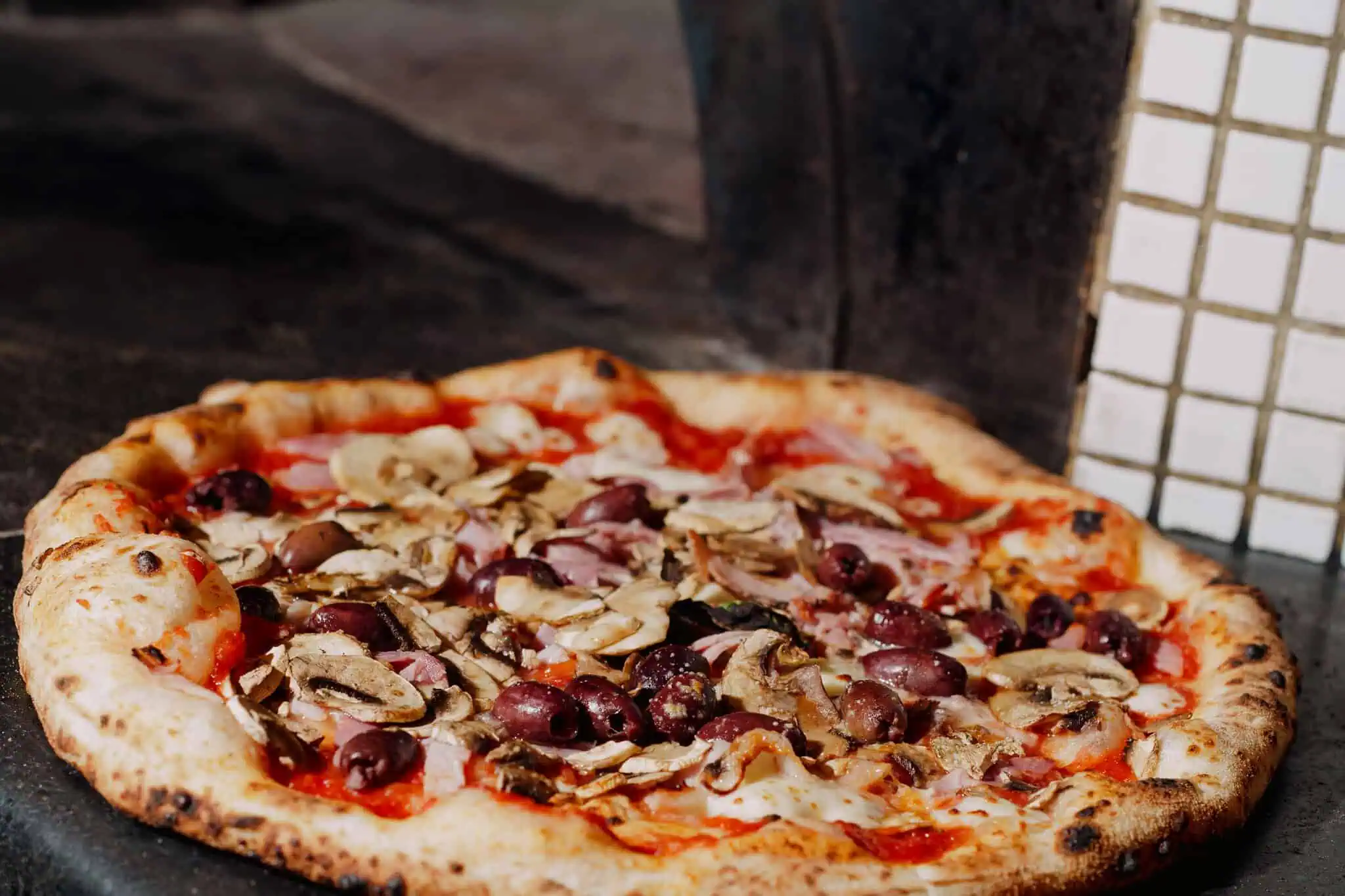
The Leopard-Spot Crust Isn’t Just Aesthetic
Those dark blistered spots on the crust?
They’re called “leoparding”.
They’re a result of:
- Intense heat
- High-hydration dough
- Proper fermentation
They create texture contrast — crisp exterior, soft interior.
That’s almost impossible to replicate in conventional ovens.
Why Wood-Fired Pizza Travels Better As Takeaway
People often assume takeaway pizza gets worse the longer it sits.
That’s true for heavily oiled, thick-base pizza.
Authentic Neapolitan pizza is different.
Because the dough is:
- Light
- Properly fermented
- Less greasy
It doesn’t become heavy or dense as it cools.
When reheated properly (see 👉 How To Reheat Wood-Fired Pizza), it regains crispness easily.
Ingredient Quality Makes A Bigger Difference Than You Think
Wood-fired pizza isn’t just about the oven.
It’s about balance.
Traditional Italian pizza uses:
- San Marzano tomatoes
- Fior di latte mozzarella
- 00 flour
- Fresh basil
- Premium cured meats
Because the cooking time is short, ingredients remain bright and defined.
Conventional ovens often require heavier cheese and sauces to compensate for longer cooking times.
That leads to:
- Greasier slices
- Dense texture
- Overpowering flavour
Wood-Fired vs Conventional Oven Pizza: A Quick Comparison
| Wood-Fired Pizza | Conventional Oven Pizza |
|---|---|
| 400°C+ heat | Lower temperature cooking |
| 60–90 second cook time | Several minutes cook time |
| Light, airy crust | Often thicker, denser base |
| Balanced toppings | Heavier cheese coverage |
| Quick reheating recovery | Often dries out or becomes rubbery |
This is why people searching for “oven wood pizza” or authentic Italian pizza are looking for something specific.
They want flavour — not just convenience.
Why Authentic Technique Matters For Takeaway
When takeaway pizza is made properly:
- It doesn’t feel heavy
- It doesn’t leave you sluggish
- It doesn’t rely on excess oil
The difference is fermentation.
Traditional dough is often fermented for up to 48 hours, creating:
- Better flavour development
- Improved digestibility
- Lighter texture
That’s why wood-fired takeaway pizza feels satisfying without feeling overloaded.
More Than Just Convenience
Takeaway shouldn’t mean compromise.
When pizza is cooked in a traditional wood-fired oven, takeaway becomes an extension of the restaurant experience — not a shortcut.
Whether it’s:
- A relaxed family dinner
- Casual entertaining
- A midweek treat
- A weekend gathering
Wood-fired pizza holds its structure and flavour in a way mass-produced pizza simply doesn’t.
Ready to experience the difference?
👉 Order Wood-Fired Takeaway Pizza
👉 Browse Our Full Menu
Frequently Asked Questions
The high heat of a wood-fired oven cooks pizza quickly, creating a crisp crust, soft interior and balanced flavour.
Authentic wood-fired pizza often uses lighter dough, fewer processed ingredients and less oil, making it feel lighter and more digestible.
Yes. Because of the high-temperature cook and light dough, it reheats well and regains crispness in the oven.
Traditional wood-fired ovens can reach temperatures above 400°C.