
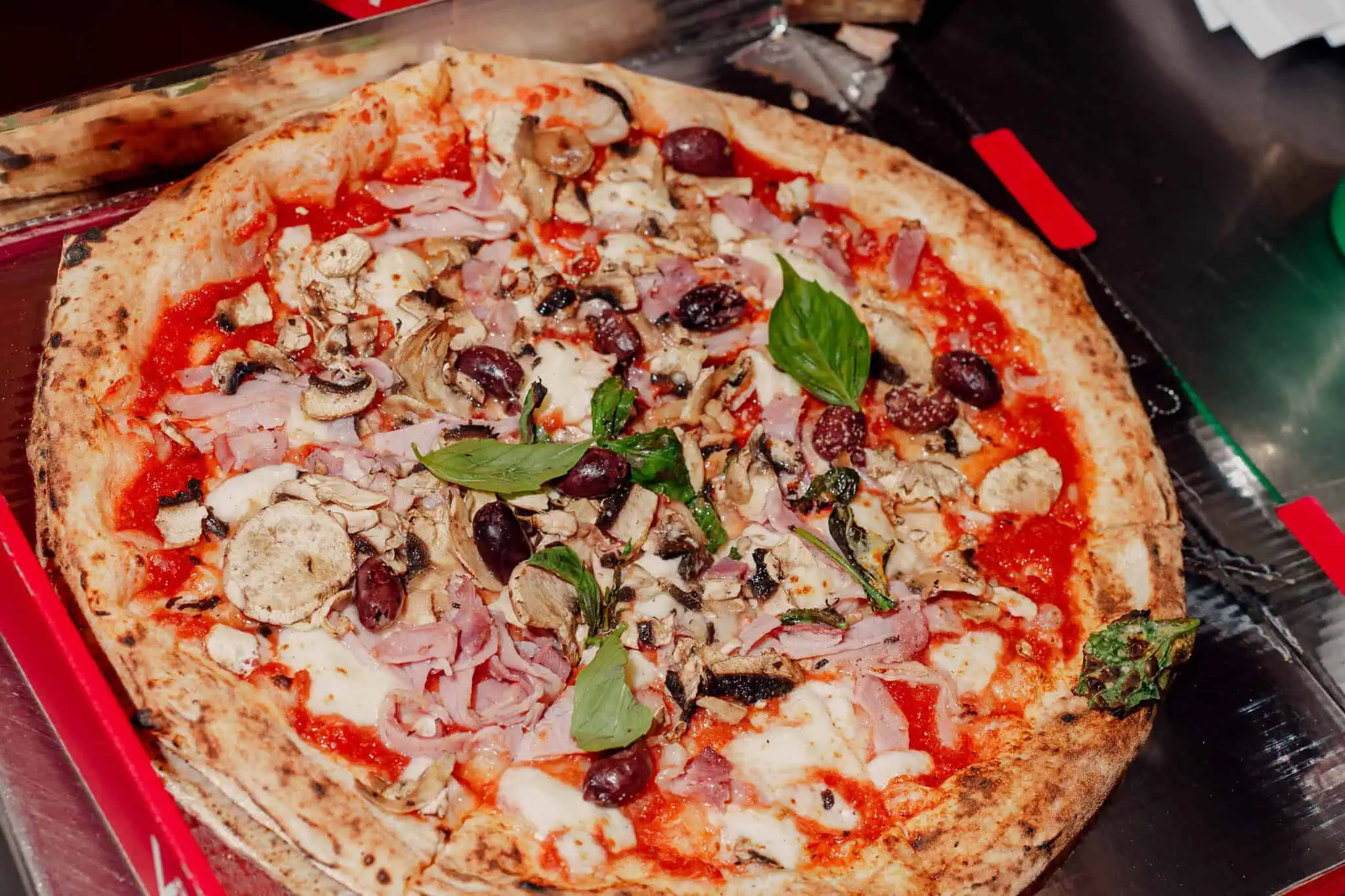
Whether you’re enjoying leftovers or picking up takeaway on the way home, reheating wood-fired pizza the right way makes all the difference.
Unlike conventional frozen or delivery pizza, wood-fired pizza has a light, airy crust and delicately balanced toppings. Reheating it carelessly can lead to soggy bases or chewy edges — but done right, it can taste almost as good as when it first came out of the oven.
Short answer: low, even heat with a method that crisps the base without overdrying the toppings.
👉 View The Takeaway Menu
👉 Explore Takeaway Pizza Options
Best Methods To Reheat Wood-Fired Pizza
Here are the most effective ways to reheat your pizza so it stays crispy on the bottom and melty on top.
1. Oven Method — Most Reliable
This is the best method when you want to maintain texture:
- Preheat oven to 180–200 °C
- Place pizza on a baking tray or oven rack
- Heat for 6–10 minutes, checking often
Pros: evenly heated, crispy base
Cons: longest method
2. Skillet/Stovetop — Quick & Crispy
- Heat a non-stick pan on medium
- Place pizza slice in pan, cover with lid
- Heat for 3–5 minutes
This traps steam to melt cheese while crisping the bottom.
3. Air Fryer — Fast + Effective
- Set air fryer to 160–180 °C
- Reheat for 3–6 minutes
A great choice if you want quick results and crunchy edges.
4. Grill/BBQ — Outdoor Crisp
- Preheat grill to medium heat
- Place pizza on grill mesh
- Heat for 3–5 minutes, watching closely
Gives a slightly smoky finish and crisps the crust beautifully.
Reheating Tips For Best Results
- Let chilled pizza come closer to room temperature before reheating
- Add a sprinkle of fresh basil or olive oil for extra flavour
- Avoid microwaving — it makes the crust chewy
- If toppings are cold, preheat just the base first
These tips help preserve the light texture and balance that wood-fired pizza is known for.
Why Wood-Fired Pizza Reheats Better Than Frozen Or Steam Baked Pizzas
Thanks to its airy, fermented dough and high-heat cooking process, wood-fired pizza has structure and elasticity. That means it:
- retains texture when reheated
- crisp ups fast without drying out
- doesn’t become greasy or rubbery
Conventional ovens or delivery styles don’t develop the same crust structure — which is why reheating them often results in soggy, dense slices.
Common Mistakes To Avoid
- Reheating straight from fridge without initial warming
- Microwaving (creates rubbery crust)
- Overheating at extremely high temperatures — burns edges before core warms
Ready for more pizza tips?
- 👉 Why Wood-Fired Pizza Tastes Better
- 👉 What Makes Neapolitan Pizza Different
- 👉 View The Takeaway Menu
Frequently Asked Questions
Microwaving makes the crust chewy and soggy — it’s best avoided.
In a pan, yes — covering traps steam to melt cheese while preserving crispness.
It depends on method, but most options finish in 3–10 minutes.